


Introduction
Many drivers assume Texas is a no-fault state because of PIP coverage. It isn’t. Fault still decides who pays after a crash. This short guide explains how it works, what insurance you need, and what to do next.
Key Takeaways
Is Texas a no fault state? No. Texas handles most car accident injury claims through an at-fault system, but optional coverage can help with certain expenses regardless of who caused a crash.
- Texas is an at-fault state, not a no-fault state.
- The at-fault driver may be responsible for another person’s covered losses.
- Texas requires minimum liability insurance, but drivers may carry more.
- Personal Injury Protection (PIP) and Medical Payments coverage can help pay medical expenses under the terms of a policy.
- Texas’s comparative responsibility rule can reduce or bar an injured person’s recovery.
Is Texas a No-Fault State?

No. When it comes to answering the question whether “texas a no fault state” one has to admit that no, Texas is not a no-fault state as Texas follows the fault-based approach to car accident cases.
In such a case a person whose car was damaged can file for compensation from another party and its insurer or the insurance company of the person itself.
In no-fault systems, an individual has the right to file an insurance claim to his/her own insurer regardless of whether he/she was at fault or not in order to be compensated for the losses and injuries caused by the accident.
A personal injury protection (PIP) coverage exists in Texas, however, that does not mean that the state has a no-fault approach.
Most people hear “PIP” and assume Texas is no-fault. It isn’t. Fault still decides who pays, and that is the first thing worth understanding after a crash.
In order to get a better understanding of the Texas fault system, it is important to differentiate liability laws of the state from coverage options of a person.
It is necessary to consider that different aspects like fault, coverage, and kind of the loss will influence the claim procedure and its outcome as the insurer may refute your fault or the amount claimed by you.
How At-Fault Works in a Texas Car Accident Claim
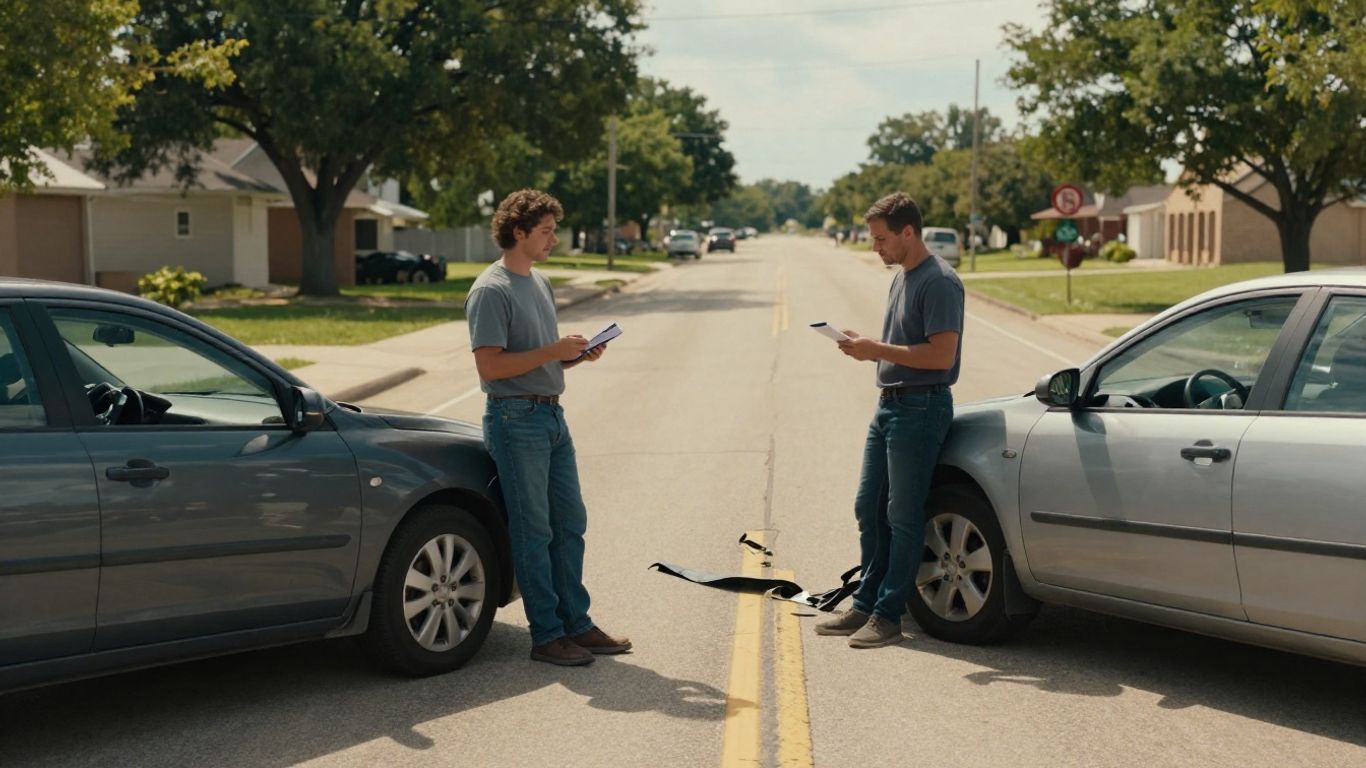
In an at-fault system, fault is very important in making a claim for damage to persons or to property. The evidence can be statements, photographs, the police report, and details of the damage. Fault is important to know who is liable to pay for it, but not just that.
Who pays for your injuries and damage
If another driver caused the crash, you may seek compensation from that driver’s liability insurer for eligible losses. During the claims process, you may communicate with an insurance claims adjuster, who may review the accident, available evidence, and claimed losses.
You can also turn to your own policy if it includes coverage that applies, such as collision coverage for vehicle damage or PIP for certain injury expenses. Whether a specific cost is covered depends on the policy and the circumstances.
The types of coverage involved are different, so it helps to distinguish the usual role each may play. This table is a general guide, not a guarantee that an insurer will pay a particular claim.
| Coverage or claim | Typical role | Main consideration |
|---|---|---|
| Other driver’s liability | May cover losses for which that driver is legally responsible | Fault and policy limits matter |
| Your PIP coverage | May cover certain medical expenses and lost income | Coverage terms and limits apply |
| Your collision coverage | May help pay to repair your vehicle after a collision | A deductible may apply |
| Your Med Pay coverage | May help with covered medical expenses | Availability and limits depend on the policy |
If the driver who caused the accident does not have enough insurance to cover the losses, uninsured motorist coverage or underinsured motorist coverage may become relevant depending on the circumstances and the terms of the policy.
The 51% rule
The state of Texas operates under a modified comparative negligence theory. The individual can seek compensation for their losses even if they were partially at fault, provided that their share of responsibility is less than 50 percent.
However, the compensation may be lowered based on their share of the responsibility, but if the individual was more than 50 percent at fault, they cannot get compensated.
That means that documenting all the information about the accident becomes crucial since the drivers’ versions of events may vary.
The pictures, witness information, and notes are essential to make sure the facts will not be distorted; the insurance company’s decision does not imply that it is the legal one.
Texas Minimum Car Insurance Requirements

Financial responsibility must be proven by Texas motorists and this is usually achieved through liability insurance.
The limits in Texas are often referred to as 30/60/25, which means $30,000 in bodily injury coverage for one individual, $60,000 in bodily injury per accident coverage, and $25,000 for property damage per accident. It is important to remember that these limits don’t mean that all claims will be covered.
Such limits may not be enough in case of serious injuries or property damage. Higher limits may be selected by a driver and additional coverage may be required in case of financing the vehicle. Thus, it may be useful to check the declaration page of your insurance.
Minimum limits are a legal floor, not a safety net. Serious injuries can pass them quickly, so it is worth knowing what your own policy actually says.
Liability insurance should be aimed at dealing with the damage incurred, for which the insured driver is liable, but it does not necessarily mean that it will cover the loss in case the damage was done to the insured vehicle itself.
There could be other terms of the insurance contract and certain exclusions that will make the insured responsible for the payment of the loss.
Personal Injury Protection (PIP) and Med Pay in Texas

PIP and Medical Payments coverages are distinct from liability insurance. Typically, Texas insurers have to offer the PIP option to their policyholders, who can then decline the coverage in writing.
If it is provided, the PIP could assist with paying certain expenses related to medical treatment and loss of income due to an auto accident covered by the policy.
Med Pay, or Medical Payments coverage, is another additional coverage that could help cover some expenses for medical treatment of injuries received as a result of an accident.
It does not identify who caused the accident; besides, it does not substitute liability insurance. The specifics depend on a particular insurance plan, and one can review the coverage limit and other terms.
It can matter even though Texas is not a no-fault state, since it gives one an opportunity to use his/her insurance plan and get certain coverage in question while fault is being determined, but does not determine who is liable for the accident.
One can request the clarification of how the coverage would apply to a particular expense from their insurer.
If an insurer disputes coverage, delays the claim, or denies an injury claim, the reason for the decision should be reviewed carefully.
Understanding what to do if an injury claim is denied by insurance can help you identify what documentation or additional steps may be necessary.
What to Do After a Car Accident in Texas

In case of an accident, your first response would be to get yourself out of harm’s way, if possible, and then seek assistance from the authorities if there’s any possibility that someone has been injured.
In any case where things are under control, you should exchange relevant contact and insurance information with the other party.
A few simple things will help to preserve the information that might become important in the future:
- Take pictures of the positions of the vehicles, any apparent damage, and the overall scene.
- Obtain the names and contact information of witnesses.
- Make sure you have copies of the police report, medical information, estimates on repairs, and all correspondence related to claims.
- Inform your insurance company and ask what documents it requires.
This way, you will have an opportunity to document what happened and preserve information about your losses.
When making a claim to the insurance company of the other driver, document your telephone conversations and written replies.
Because legal deadlines can affect a person’s ability to pursue a claim, it is also important to understand the Texas statute of limitations that may apply to the case. For more details, see insurance claim after a car crash.
When to Talk to a Personal Injury Lawyer

If you are unsure when to hire a personal injury lawyer, a discussion with an injury attorney may be beneficial when there are significant injuries, disputed liability, questions about insurance coverage, or disagreement about the value of a claim.
The website LawyerHelpNow offers personal injury attorney listings, including access to a car accident lawyer who can review the circumstances of a Texas crash.
Moreover, LawyerHelpNow has a free case evaluation form that can allow one to find out whether seeking a legal consultation is something that would be helpful in their particular case. A directory or a case evaluation is not a replacement for a consultation of a case with an attorney.
If you were injured in the Houston area, you can review the top-rated car accident lawyers in Houston, TX and request a free match.
If you would like to consider this option, LawyerHelpNow can help you find a personal injury lawyer and explore whether a legal consultation may be appropriate for your situation.
Evidence shapes how an insurer sees your share of fault. Photos, witness details and the police report matter, and many injury lawyers offer free consultations if you are unsure where you stand.
Frequently Asked Questions
Is Texas a no-fault state for car insurance?
No. Texas generally uses an at-fault system, so responsibility for a crash is important when seeking compensation from another driver’s liability coverage.
What does an at-fault state mean after a crash?
It generally means a person may seek payment from the driver responsible for the collision, subject to fault, insurance coverage, and policy limits.
Does Texas require Personal Injury Protection?
Insurers generally must offer PIP, but a policyholder may reject it in writing. Check the policy to confirm whether PIP is included.
What are Texas’s minimum car insurance limits?
The commonly stated minimum liability limits are 30/60/25: $30,000 per injured person, $60,000 per accident for bodily injury, and $25,000 for property damage.
Can I recover damages if I was partly at fault?
Possibly. Under Texas’s modified comparative responsibility rule, recovery may be reduced by a person’s share of responsibility, and a person more than 50 percent responsible generally cannot recover from another party.
What is the difference between PIP and Med Pay?
Both may help with certain medical expenses under the terms of a policy, but they are distinct coverages with different policy terms and limits. An insurer can explain what a particular policy covers.
How long do I have to bring a Texas car accident claim?
Deadlines depend on the type of claim and the circumstances. Texas personal injury claims commonly have a two-year limitations period, but it is wise to get advice promptly because exceptions and other deadlines may apply.