


Introduction
Leaving a lease early is sometimes possible, but you can’t simply hand back the keys. The right path depends on your lease, your reason for leaving, and local law. This short guide covers your legal options, the possible costs, and the steps to take first.
Key Takeaways
Ending a lease early can be possible, but if you’re wondering how to get out of a lease, the right path depends on your lease, your reason for leaving, and local law. I’d start by checking the agreement and documenting every conversation.
- Read the lease for early-termination, notice, subletting, and assignment terms.
- Some laws protect tenants facing specific circumstances, but requirements and deadlines vary.
- A written agreement with the landlord can clarify costs and the move-out date.
- Subletting, assigning the lease, or finding a replacement tenant may offer alternatives.
- Keep records of notices, repairs, payments, and the condition of the rental.
Can You Break a Lease Early?

Yes, but depending on the lease agreement and the place where you live, it is not necessarily true that you will be able to terminate the lease without having to pay anything.
A fixed-term lease usually means a promise to pay rent during a specified time; therefore, just leaving does not automatically terminate your responsibilities.
There are certain situations in which some laws permit tenants to terminate their lease before the end of the agreed-upon period, while in other cases, you need to discuss it with your landlord.
Notice requirements and documentation can vary from state to state and city to city. Certain states, including Texas, have specific laws that may allow tenants to terminate a lease in qualifying circumstances.
A lease is a promise to pay rent for a set period, and leaving does not cancel that promise. Start by reading the early-termination and notice terms before you make any plans.
If there is no law or any clause in the lease that helps in this matter, then inquire from the landlord whether he can provide you with an agreement or find someone else to take the apartment.
Getting out of a lease agreement usually does not involve simply handing over your keys. In order for everything to be settled properly, get it all in writing.
Legal Reasons You Can End a Lease Without Penalty
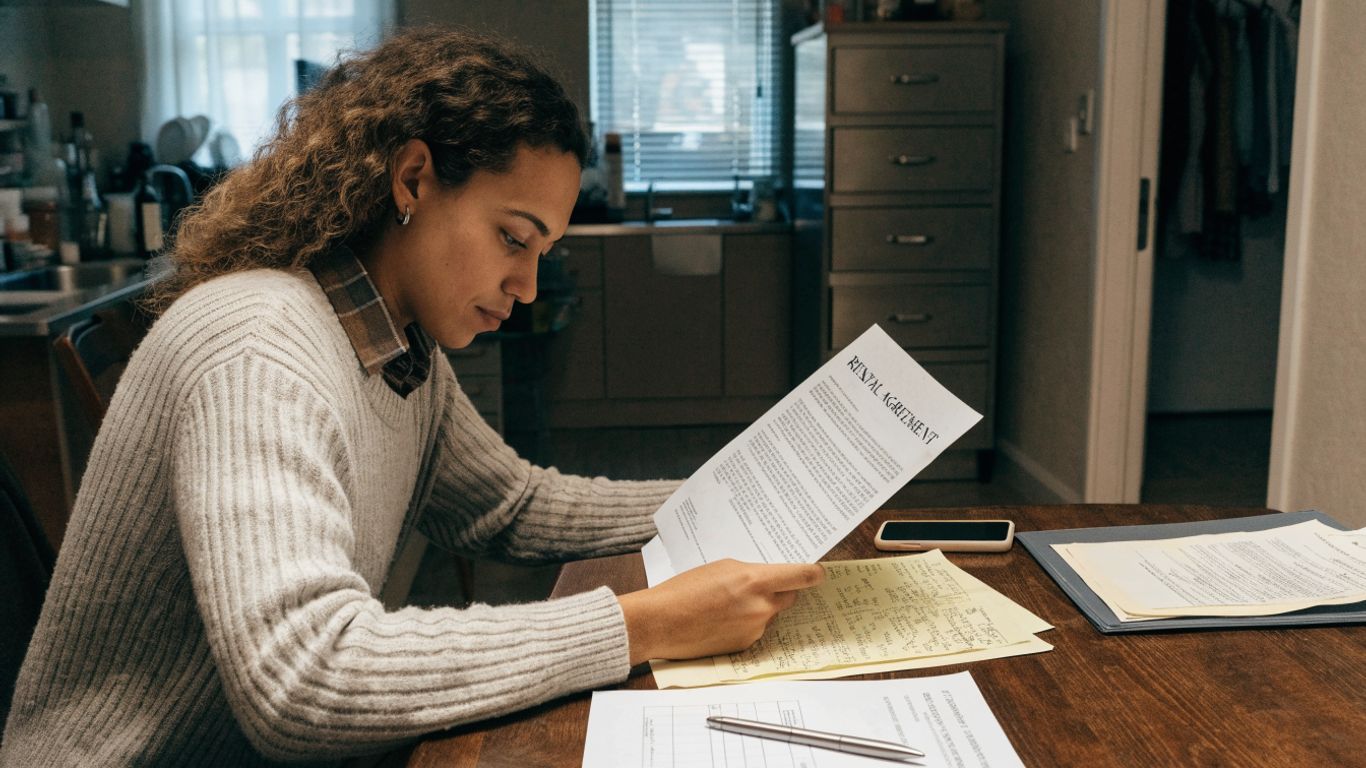
While some legal provisions can permit tenants to break the lease without any penalty charges, it is not the case with all such laws.
The reasons behind breaking the lease, the type of tenancy, and the notice/evidence provided can influence the result. I would check the relevant laws before opting for any exception.
Military Deployment or Relocation Orders
Some servicemembers have an opportunity under federal law to terminate their residential lease agreement upon enlistment or upon receipt of qualified orders.
This federal law contains certain conditions for the tenant and a notice period, and the tenant will be required to send in the orders alongside notice. I will check if these orders qualify under the law first.
Unsafe or Uninhabitable Living Conditions
If there are serious problems that make the rented accommodation unsafe or uninhabitable, the tenant may have certain rights under local law.
This can include mold or other serious problems in an apartment, depending on the circumstances and applicable housing rules.
However, the necessary procedures will differ from place to place. In some cases, the landlord should be notified of the issue and given an opportunity to correct it before the tenant attempts to terminate the lease.
However, the necessary procedures will differ from place to place. In some cases, the landlord should be notified of the issue and provided with an opportunity to solve it prior to terminating the contract.
Landlord Violations
If the breach is serious enough, for instance, failure to fulfill an obligation to keep the property in good order, the tenant may have remedies under local law.
In some situations, ongoing problems with the property may also raise questions about problems with your apartment complex and whether additional legal action is available.
If the law allows the tenant to terminate the lease, the tenant may need to show why the termination was justified and what efforts were made to resolve the problem.
Documentation of the issue in a clear and concise manner may be helpful in proving one’s point. It will facilitate the explanation of the problem as well as the process followed.
For instance, a tenant who is faced with a repair problem may present the relevant information in the following form:
| Record | What to Include | Why It May Help |
|---|---|---|
| Repair request | Date, issue, and delivery method | Shows when the landlord was notified |
| Photos or video | Date and affected area | Records the condition over time |
| Landlord response | Reply, repair date, or no response | Documents what happened next |
| Inspection record | Findings and inspection date | Adds context about the condition |
These documents alone do not automatically create an entitlement to end the relationship, but they may assist with timing.
Prior to relocating, make sure you know the notification requirements for your jurisdiction and seek guidance on the remedy available to you.
Domestic Violence Protections
There are a number of states that allow a victim of domestic abuse, stalking, or some crimes to terminate their lease under special circumstances.
There might be restrictions concerning the situations that will be considered valid, what kind of proof will be accepted, and the amount of written notice needed.
If a person is in need of such protection, he or she should contact an appropriate legal assistance organization or lawyer.
Other Ways to Get Out of a Lease

Even in the event that there is no exception clause available, it may be possible to get out of the lease through practical means.
This may include terms such as an early-release fee, procedures for getting approval of the subtenant, or transfer terms stated within the lease agreement.
Many landlords would rather agree on a plan than deal with a dispute. If you reach a deal, put it in writing, including the move-out date, the costs, and what happens to your deposit.
Negotiate Directly With Your Landlord
A face-to-face discussion may sometimes result in a set agreement regarding the move-out date, a charge, or any other solution that suits both parties.
State your case clearly, give a practical plan, and request your landlord to put everything in writing. This will help you avoid conflicts over rent, deposit, or move-out date in the future.
Sublet or Assign Your Lease
Subletting typically refers to renting to another person with you as the tenant based on the original rental contract.
Assignment normally refers to assigning tenancy rights to another individual, but whether you will be relieved of future obligations depends on the circumstances.
Before subletting or assigning your tenancy, it is wise to review the original lease and secure necessary permission in writing.
What is important about the above distinction is that the new occupant may not inherit all the obligations associated with the original rental contract. It is just a starting point and not meant to replace the examination of your lease or local law:
| Arrangement | General structure | What to confirm |
|---|---|---|
| Sublet | Another renter occupies the home under an arrangement with you | Whether you remain responsible for rent and damages |
| Assignment | Another renter takes over the tenancy | Whether the landlord must consent and whether you are released |
| Agreed early end | You and the landlord set a termination date | The final rent, fees, deposit handling, and key return |
Ask the landlord to spell out who is responsible for rent, damage, and other lease duties after the change. Keep a copy of any approval and signed agreement before handing over the keys.
Find a Replacement Tenant
The landlord can agree to have another person replace you as the tenant, especially if he fulfills all the conditions of renting the property.
The ability for you to find someone else and the requirement for the landlord to accept that person will depend on the agreement between the parties as well as the law of the particular locality.
What Happens If You Break a Lease Without Permission?

Leaving without having a legal right or contract leaves you liable for the rent payments on the lease, which will be calculated based on local law, the remainder of the term and whether the landlord has found another tenant.
I wouldn’t advise making any assumptions about your rental liability based on handing back the keys or giving notice verbally.
Other costs might include past-due rent, allowable fees, or damage costs that go beyond normal wear and tear.
Depending on the circumstances, a dispute over these charges could lead to a demand for payment or litigation.
Handing back the keys or telling the landlord verbally is usually not enough. Keep written proof of every notice, payment, and conversation.
If you believe the landlord’s conduct or the condition of the property has created a separate legal claim, review the lease, preserve your documentation, and consider obtaining advice about the remedies available in your jurisdiction.
The consequences can differ, but in all cases, a landlord has a responsibility to mitigate their damages through finding a new tenant if applicable.
That does not necessarily mean every claim is legitimate or that you are not responsible for more rent payments. If there is any dispute regarding the charges, consult the lease and local law for advice.
Steps to Take Before You Move Out

Prior to choosing an effective date for moving out, I will review the lease and determine the relevant provision or law which will enable me to do so.
It is important to look into the notice period, the manner of giving the notice, any associated charges and any special conditions such as assignment or subletting.
A short paper trail can help keep the move organized and reduce confusion later. I’d make sure the essentials are handled in a deliberate order:
- Notice shall be served as required by the lease agreement or by law.
- Copies of the notices sent, replies received, repair requests, and documents in support shall be kept.
- Make sure that any terms regarding the termination date, charges to be paid and rent due are documented in writing.
- Photograph the state of the rental and document key exchanges and payments.
Once the notice is sent, confirm receipt and make sure everything else is clear. Take pictures on the day of the move out, exchange keys, and give your new address for deposits.
Frequently Asked Questions
Can I break a lease early if I lose my job?
Job loss alone does not automatically end a lease, though you can ask the landlord to negotiate a release or payment arrangement. Check the lease and local law for any applicable options.
How much notice do I need to give before moving out?
The notice period depends on your lease, the reason for leaving, and local law. Follow the required timing and delivery method, and keep proof that the notice was sent.
Can my landlord charge me rent after I move out?
Possibly. If you leave without an applicable legal protection or agreement, you may remain responsible under the lease, subject to local rules and the landlord’s duties.
Does returning my keys end my lease?
Not necessarily. Returning keys may show that you gave up possession, but it does not by itself confirm that the lease or payment obligations ended.
Can I sublet without my landlord’s permission?
That depends on the lease and local law. Check the agreement for consent requirements and get any approval in writing before someone else moves in.
Can I use my security deposit to pay the last month’s rent?
Do not assume you can. The lease and local law determine how deposits may be used, and a landlord may treat unpaid rent separately from deposit deductions.
What should I do if my landlord disputes my move-out?
Save the lease, notices, messages, payment records, and move-out photos. Review the specific claim and consider asking a local tenant attorney or legal aid organization for guidance.
For a separate personal-injury matter, send a free legal inquiry to LawyerHelpNow, which connects people seeking personal injury lawyers with its lawyer-finding service.