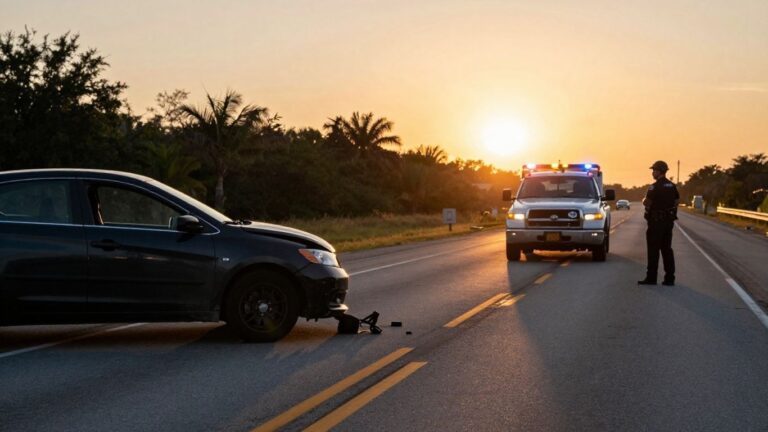

Company Vehicle Accident Injury Claim: Everything You Need to Know (2026 Guide)
A company vehicle accident injury claim can be more complicated than a standard car accident because employment duties, commercial insurance, workers’ compensation, and third-party liability may overlap. The correct path depends on who was driving, why the vehicle was being used, who caused the crash, and which state’s laws apply.
Acting quickly to obtain medical care, report the collision, preserve evidence, and identify every available insurance policy can protect both your health and your legal rights. This guide explains the claim process, potential liable parties, available compensation, and the mistakes that can weaken a company car accident case.
Quick Answer: What Should You Do After a Company Vehicle Accident?
After a crash involving a company-owned, leased, rented, or business-used vehicle, prioritize safety and medical care first. Call emergency services when needed, exchange information, document the scene, report the collision to the employer or fleet manager, and notify the appropriate insurers. If you were working at the time, a workers’ compensation claim may apply, while a separate third-party claim may be possible against another negligent driver or company.
Do not assume the employer automatically pays every loss, and do not sign a release or give a broad recorded statement before understanding the available claim paths. Company vehicle cases often involve commercial auto coverage, employment records, GPS or route data, maintenance records, and state-specific deadlines. Serious injuries, disputed work status, or multiple insurers are strong reasons to obtain legal advice early.
For a more detailed checklist, read what to do after a workplace injury and what to do after a car accident.
Key Takeaways
- Employer liability often depends on whether the employee was acting within the scope of employment when the collision occurred.
- An injured employee may have a workers’ compensation claim and a separate third-party negligence claim, depending on state law and who caused the crash.
- Commercial auto insurance may cover company-owned vehicles, while hired and non-owned auto coverage may matter when rented or employee-owned vehicles are used for business.
- Prompt medical treatment, employer notice, photographs, witness information, and complete financial records strengthen the claim.
- Pain and suffering is usually not a standard workers’ compensation benefit, but it may be recoverable in a valid third-party injury claim.
- Notice and filing deadlines vary by state, claim type, employer, insurer, and whether a government entity is involved.
What Is a Company Vehicle Accident Injury Claim?
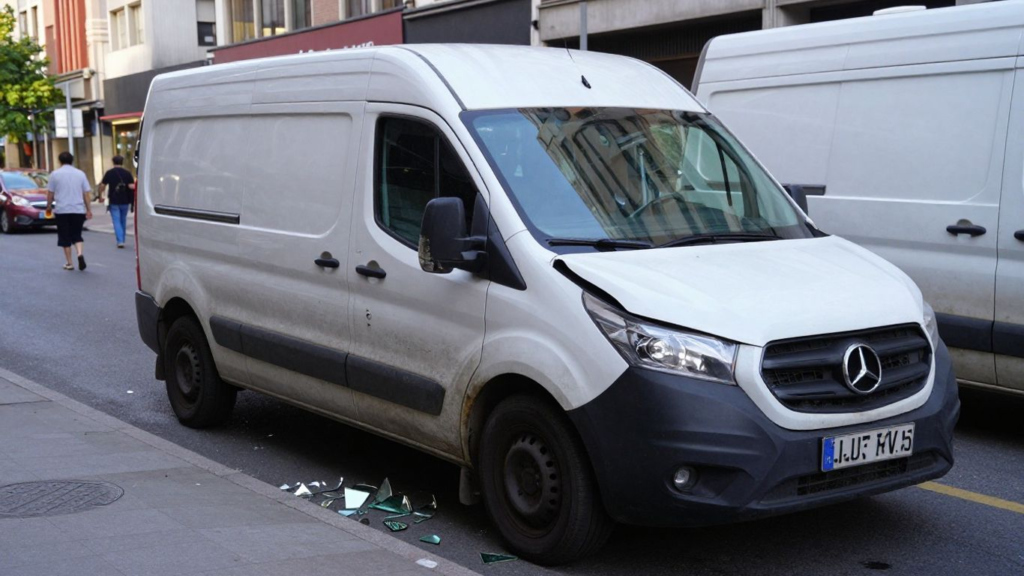
A company vehicle accident injury claim is a claim for damages that have resulted from a vehicle accident involving a company-owned, leased, rented, or used for company business. The injured person can be the employee driver, a passenger, another motorist, a cyclist, or a pedestrian. The legal and insurance analysis varies based on the injured party’s role and whether the driver was engaged in his/her duties at the time of the accident.
There may be multiple parallel questions in these cases. One inquiry is to ascertain the cause of the collision. A second question is whether the employee was performing a task in the scope of employment. A third one recognizes which insurance policies are applicable. Workers’ compensation can cover medical and wage benefits for an injured employee even if no one has yet been determined to be at fault.
Who Can Be Liable in a Company Vehicle Accident?
The liability should be determined by evidence and not the logo on the car. The employer may be held liable for the negligence of an employee who was working as part of their duties, but another driver, contractor, vehicle owner, maintenance company, manufacturer, or public entity might also be liable. Specific standards and claims are determined by state law.
A full investigation should include a review of the purpose of the trip, work schedule, dispatch logs, electronic logs, vehicle ownership, driver qualifications, maintenance logs, and police evidence. The best claim distinguishes between the conduct of the employer and the conduct of the driver.
The Employee Driver
If the employee driver was speeding, distracted driving, changing lanes in unsafe positions, fatigued, impaired, or otherwise in violation of traffic laws, he or she can be held personally liable for the accident. Even if the employer or commercial insurer might ultimately defend and cover the driver’s actions, they are still relevant.
The employer’s responsibility can also be impacted if there is a personal deviation from work. A short business trip might be considered differently than a longer vacation, and it depends on each state. Route data, phone records, time sheets, and supervisor instructions can all be significant pieces of evidence.
The Employer Under Respondeat Superior
Respondeat superior is a doctrine that holds an employer liable for negligent acts of an employee if the employee was acting on the employer’s behalf. Examples of activities that may provide employer responsibility include deliveries, service calls, visits to clients, errands, and travel between work sites.
It is not automatically assumed that the employer is liable for the driver’s errors and omissions simply because the company owns the vehicle or has the driver working for them. Courts typically consider if the trip was reasonably related to the employee’s job, if it was during working hours, or if it was for the employer’s benefit. Commute, personal errands, and mixed-purpose trips may be treated differently under state law.
The Employer for Direct Negligence
In addition to vicarious liability, a business can be held liable for direct negligence if the business itself was at fault for the crash. These can include negligent hiring, retention, training, supervision, entrusting a vehicle, failing to maintain a vehicle, or enforcing an unsafe schedule, depending on state law.
These claims must be substantiated by the company’s actions, not the driver’s error. Driver qualification files, previous incidents, maintenance records, inspection records, company policies, and dispatch communications can indicate if the company disregarded a foreseeable risk.
Another Driver or Third Party
Even if a business vehicle was involved, another driver could be held as the primary cause. A third party claim may recover damages from the negligent driver and the driver’s insurance company, depending on the state’s fault laws and insurance policy limits. More than one driver may share responsibility in a multi-vehicle crash.
Other potentially liable parties may be a maintenance contractor who made unsafe repairs, a manufacturer of a defective part, a loading company who caused an unsafe condition of the cargo, or a government agency who caused a dangerous roadway. Notice and evidence requirements may vary for each additional claim.
What to Do After a Company Vehicle Accident: Step-by-Step
The initial hours following the collision impact will impact both medical recovery and the quality of evidence. Do not attempt to resolve the legal issue on the scene, but follow a logical sequence. Insurance negotiations should be secondary to safety, medical care, official reporting, and documentation.
The following steps apply to the majority of U.S. jurisdictions, but may have additional requirements depending on local laws and employer practices regarding crash reporting. Do each step when it is safe and reasonable to do so, and maintain documentation of all reports made.
Step 1: Move to Safety and Check for Injuries
Stop the vehicle, turn on the flashing red lights, and leave the roadway if it is safe and legal to do so when it is stopped. Assess driver, passengers, other drivers, cyclists, and pedestrians for injuries, and do not move individuals with suspected head, neck,k or spine injuries unless it is necessary to do so immediately to prevent a hazard.
Report injuries, hazardous traffic, suspected impairment, hit and run, or significant property damage to emergency services. In the event of hazardous materials, special equipment, or commercial cargo being transported, follow the employer’s emergency procedures and do not delay emergency medical assistance.
Step 2: Obtain Medical Care
Take emergency evaluation if symptoms are severe, and get immediate medical advice even if pain seems minor. Symptoms of concussion, soft tissue injury, internal injury, and spinal trauma may not be present immediately after the injury, and the absence of immediate symptoms does not rule out the presence of an injury.
Notify the medical provider of the condition following the motor vehicle collision and accurately describe all symptoms. Maintain discharge instructions, prescriptions, referrals, work restrictions, bills, and appointment records as they link the injury to the crash and provide a record of the recovery process.
Many crash victims experience delayed car accident symptoms that appear hours or even days after the collision.
Step 3: Call Police and Obtain the Report Information
Adhere to the reporting requirements of the jurisdiction the collision took place in. It is especially crucial to have the police document the accident if anyone is injured, vehicles are towed, fault is disputed, the driver is uninsured, or a commercial vehicle is involved.
Document the agency, officer name, badge number, incident number, and directions to get the final report. If officers don’t respond, ask if a driver-filed report is needed and keep a record of your efforts to file a report.
Step 4: Exchange Information Without Admitting Fault
Gather the names, addresses, phone numbers, driver’s license data, license plates, vehicle ownership, and insurance information for all drivers. Markings to identify the fleet or contractor, vehicle number, business name, and employer contact should be recorded.
Stay objective, do not apologize, guess at speed, or take responsibility. What is said during a stressful time may be misinterpreted afterward, particularly before investigators can see video footage, physical evidence, and witness statements.
Step 5: Photograph and Preserve the Scene
Record wide and close shots of vehicle locations, damage, skid marks, debris, traffic controls, weather, road conditions, cargo, company markings, visible injuries, and dashboard warnings. Record video where appropriate to illustrate the general area and traffic flow.
Do not edit original files. Look for nearby businesses, homes, traffic cameras, dash cameras, or fleet cameras that might have video that can be overwritten, so if someone wants to preserve it, it will be preserved.
Step 6: Report the Crash to the Employer
The employee should report to the supervisor, fleet manager, safety officer, or human-resources contact as soon as reasonably possible. Follow written accident procedure, but don’t let internal paperwork delay emergency treatment.
Provide a factual written report and retain a copy, including date, time, recipient,t and method of notice. If the employer requires a detailed statement when you are medicated, in pain, or not certain of the facts, ask for time to consider the information before signing.
Step 7: Identify Every Insurance Policy
The coverage that may apply includes commercial auto liability, workers’ compensation, hired and non-owned auto coverage, umbrella/excess coverage, personal auto coverage, uninsured or underinsured motorist coverage, and another driver’s policy. The order is determined by the facts and policy language.
Never presume that a personal auto policy will cover business use or that the company policy covers all drivers and trips. Immediately inform the necessary carriers, but refrain from signing medical authorizations or final releases until the claim structure is certain.
Understanding how long an insurance claim takes and the role of an insurance claims adjuster can help you navigate the claims process more effectively.
Step 8: Create a Complete Accident File
Compile the police report, employer incident report, photographs, witness information, medical records, bills, wage information, work restrictions, repair documents, insurer letters, and notes of all conversations. A chronological file will allow for inconsistencies to be more easily identified and corrected.
Maintain a symptom/recovery log that documents pain, sleep disturbance, side effects of medications, activities missed, and assistance needed from family members. Do not use exaggerated language, and keep the record up to date.
Step 9: Review the Claim Before Accepting a Settlement
An early offer might come before a full diagnosis, future treatment plan, wage loss, or insurance coverage is known. Review the proposed release against all possible claims, as signing may terminate rights against parties or policies that have not been thoroughly investigated.
If the injury is severe, the cause of the injury is not clear, or there are multiple insurance companies involved, consult legal counsel before settling the claim. Before negotiations turn into a final decision, a lawyer can assess medical prognosis, future losses, subrogation claims, policy limits, and filing deadlines.
If the insurance company disputes or rejects your request for compensation, learn what to do if your injury claim is denied by insurance before accepting a final decision.
Workers’ Compensation, Commercial Auto, and Third-Party Claims
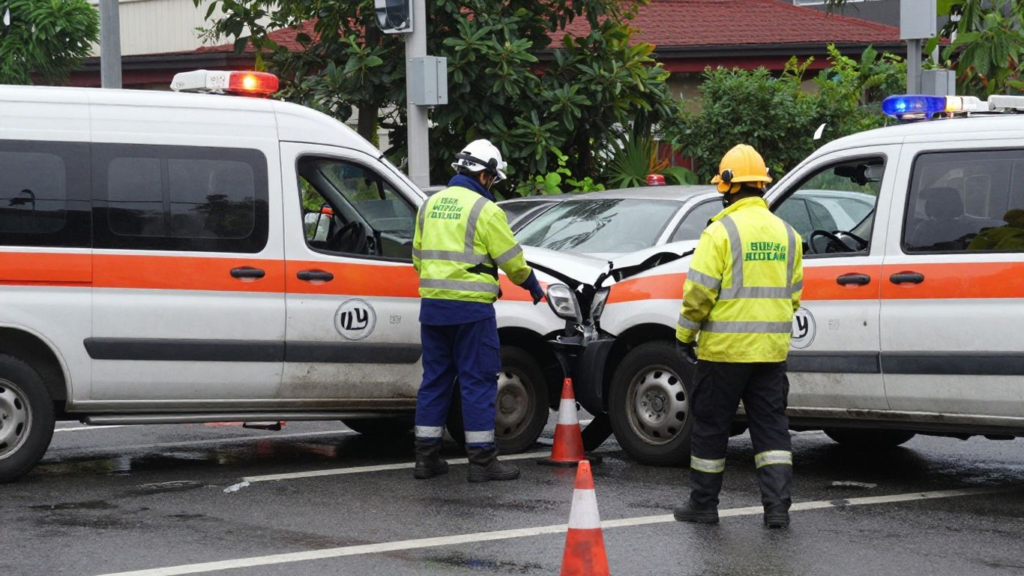
There can be multiple claims in a company vehicle crash; however, the systems do not offer the same benefits. A workers’ compensation claim is typically about the benefits that the employee is entitled to receive from the employer or a protected co-worker, whereas a third-party negligence claim is about the tort damages that the employee is entitled to obtain from someone other than the employer or a protected co-worker. Commercial auto insurance coverage is based on the vehicle ownership, driver involvement, covered use, and policy provisions.
The claims may interact in the manner of reimbursement, subrogation, credit, or lien. Many states allow workers’ compensation benefits to be paid without fault, with the workers’ compensation carrier then pursuing reimbursement from a third-party recovery. A person who is injured should not assume that he or she has waived any other claim or that he or she can be paid twice for the same injury.
If you’re unsure how work-related crashes differ from standard cases, see what to do after a car accident while working.
How the Three Claim Paths Differ
Before reviewing the comparison, identify the role of the injured person and the alleged wrongdoer. An employee injured during work may start with workers’ compensation, while a passenger, pedestrian, or other motorist may primarily pursue commercial auto and negligence claims. A third-party claim becomes especially important when someone outside the employer relationship caused the crash.
- Workers’ compensation usually addresses job-related medical care and partial wage replacement under state law.
- Commercial auto coverage may defend and indemnify a covered business, vehicle owner, or driver for insured accident liability.
- A third-party claim may include broader damages, such as pain and suffering, when negligence and causation are proven.
- Policy exclusions, employment classification, scope of employment, and state exclusivity rules can change the result.
| Claim Path | Primary Purpose | Fault Requirement | Typical Recoverable Items |
| Workers’ compensation | Benefits for an employee injured in the course of covered work | Usually no proof of employer negligence is required, subject to state law | Authorized medical care, partial wage benefits, impairment or vocational benefits where available |
| Commercial auto claim | Coverage for insured vehicle damage and liability arising from covered business use | Coverage depends on policy terms; liability payment usually follows fault or contractual obligations. | Injury liability, property damage, defense costs, and other covered losses up to applicable limits |
| Third-party personal injury claim | Compensation from a negligent person or entity outside the protected employment relationship | Negligence, causation, and damages generally must be proven | Medical losses, full wage loss, reduced earning capacity, pain and suffering, and other state-law damages |
A coordinated strategy should account for all three systems before settlement. Resolving the third-party claim without addressing a workers’ compensation lien or reimbursement right can delay distribution, while accepting workers’ compensation benefits does not automatically establish who caused the crash.
What Compensation May Be Available?
The amount of compensation will vary based on the nature of the claim, the extent of the injury, the availability of insurance coverage, fault laws, medical documentation, and state law. The value of a workers’ compensation case and a personal injury case arising from the same accident can differ due to the different types of benefits involved.
The claim must differentiate past losses from future losses and billings from what has been paid or is still due. In severe cases, medical, vocational, economic and/or life-care evidence may be needed to provide an explanation for the long-term consequences.
Medical Expenses and Future Care
Medical losses that may be recovered include emergency care, imaging, surgery, medication, rehabilitation, treatment by specialists, reasonable future care resulting from the collision, and assistive equipment. All records should include the diagnosis, treatment, medical necessity, and relationship to the accident.
Maintain itemized bills, explanations of benefits, receipts, prescription records, and written medical opinions. Treatment may need to be authorized for workers’ compensation, and proof of reasonableness and accident causation may be required for a third-party claim.
Lost Wages and Reduced Earning Capacity
A claim can involve lost overtime, bonuses, commissions, self-employment income, unpaid leave, or missed shifts. Written work restrictions, pay records, tax documents, attendance records, and employer verification are all part of the loss.
If the injury has a lasting effect on the ability to continue the same line of work or further training, then reduced earning capacity may be a factor in a third-party case. This is not the same as simply adding up the missing paychecks and may need to be analyzed vocationally or economically.
Pain, Suffering, and Loss of Normal Life
Depending on state law, a third-party personal injury claim may involve physical pain, emotional distress, sleep disturbances, disfigurement, loss of mobility, and interference with normal activities. Typically, workers’ compensation does not include a separate pain and suffering award.
Specific evidence is more convincing than general statements. Treatment notes, a consistent journal, photos, and family or co-worker testimony can tell the story of how the injury affected daily life.
If you’re wondering how these damages are valued, read how much can I sue for emotional distress.
Property Damage and Out-of-Pocket Costs
The property claim may include reasonable property damage, such as vehicle repair, total loss value, towing, storage, rental transportation, damaged personal property, etc. The vehicle claim can be filed in addition to the bodily injury claim.
Be sure to save the receipts and ask for itemized calculations before any agreement is made regarding a property settlement. Both the employee’s policy and the employer’s non-owned auto coverage may need to be reviewed if the injured employee used a personal vehicle for work.
If the collision resulted in a total loss, understanding what it means when a car is totaled can help you better evaluate the insurance settlement.
Death Benefits and Wrongful Death Claims
If a worker dies in a company vehicle accident, workers’ compensation death benefits may be available for eligible dependents and a wrongful death or survival action may be available against a negligent third party. The rules governing benefits, recoverable damages and filing procedures differ from state to state.
Preservation of employment records, vehicle data, medical evidence and insurance information is required immediately for these cases. Special procedural rules may be added for government vehicles, public employers and interstate commercial operations.
Evidence That Can Strengthen a Company Vehicle Accident Claim

Evidence in a company vehicle case extends beyond the police report and medical bills. Business records may establish the driver’s assignment, route, hours, training, vehicle condition, and employer control. These records can disappear under routine retention policies, so preservation should begin early.
- Police reports, photographs, video, dash-camera footage, traffic-camera footage, and witness statements.
- Vehicle ownership records, commercial insurance policies, fleet numbers, rental agreements, and driver authorizations.
- GPS data, electronic logging data, dispatch messages, route plans, time sheets, and delivery records.
- Driver qualification, training, disciplinary, accident-history, and safety-policy records where legally discoverable.
- Inspection, maintenance, repair, tire, brake, and recall records.
- Medical records, bills, work restrictions, wage records, tax documents, and a consistent recovery journal.
A preservation letter may be appropriate when fleet video, telematics, electronic logs, or company communications are at risk of deletion. The goal is not to collect irrelevant private information, but to preserve records that may prove how and why the crash occurred.
Special Situations That Can Change the Claim
Some company vehicle crashes do not fit the standard employee-driving-a-company-car pattern. The ownership of the vehicle, worker classification, government involvement, and purpose of travel can change insurance coverage and legal procedure.
Employee Using a Personal Vehicle for Work
If an employee drives his or her own vehicle to deliver goods, make errands, visit clients, or perform other business-related duties, the employer might have hired and non-owned auto coverage. Both policies should be checked, and the personal policy may have business-use restrictions; do not assume one is primary.
Mileage reimbursement is not an answer to the liability or coverage question. How the claim is handled depends on the purpose of the trip, if the employer controls it, policy endorsements, and state law.
Rented or Leased Company Vehicle
The rental agreement, the employer’s commercial policy, supplemental rental coverage, and the driver’s authorization may all be included in a rented or leased vehicle. Even where liability to injured persons is governed by negligence law, terms of contract may have an impact upon physical-damage responsibility.
Keep the rental contract, Reservation, Payment Method, Damage Waiver, Driver List, and Employer Instructions. Report the incident via the rental company’s procedure and the employer’s procedure.
Independent Contractor or Gig Worker
While an independent contractor may not enjoy the same workers’ compensation benefits as an employee, the classification of an independent contractor is determined by law and facts, not by the terms of a contract. Coverage and commercial policies and personal policy exclusions may also be different during different work phases.
Remember, just because a contractor doesn’t have a claim against the hiring company doesn’t mean that all claims are waived. Depending on the jurisdiction, control, ownership, negligent selection, and applicable statutes may still be relevant.
Government-Owned Vehicle
If the claim is against a city, county, state, federal agency, school district, or other public entity, special notice must be given before a lawsuit can be filed. The statute of limitations for personal injury cases may be shorter than it is for other types of cases.
Determine who the government entity is, if the employee, who owns the vehicle, and the procedure for an agency claim right away. A standard insurer notice may not meet the statutory government notice requirement.
Commute, Personal Errand, or Mixed-Purpose Trip
Commuting is generally considered a different type of travel from work trips, but there may be exceptions for special trips, traveling employees, employer-provided transportation, or compensated travel. A mixed personal/business trip will need a fact-specific scope of employment review.
Keep the order and purpose of stops. Employer liability or workers’ compensation may depend on a variety of details such as supervisor directions, route changes, and the employee’s destination.
Common Mistakes to Avoid
The biggest claim problems often result from early decisions made before the injured person understands the medical condition or the available insurance. Avoiding these mistakes can protect evidence, credibility, and the ability to pursue every appropriate claim.
- Delaying medical evaluation or failing to report worsening symptoms.
- Reporting the crash only verbally and keeping no proof of employer notice.
- Assuming the employer is automatically liable because the vehicle has a company logo.
- Giving a recorded statement while medicated, confused, or before understanding which insurer is calling.
- Signing a broad medical authorization that permits access to unrelated records.
- Repairing, selling, or disposing of the vehicle or damaged property before documentation is complete.
- Posting accident details, photographs, activities, or medical opinions on social media.
- Accepting an early settlement before future treatment, wage loss, liens, and coverage limits are known.
- Missing a workers’ compensation notice deadline, insurer notice condition, government claim deadline, or lawsuit filing deadline.
Not every mistake destroys a claim, but delay corrects harder. If an error has already occurred, preserve the remaining evidence and obtain advice rather than creating a new explanation that conflicts with the original record.
When Should You Contact a Lawyer?
A minor property-damage claim may be manageable without legal representation, but company vehicle cases become difficult when injuries, employment rules, and multiple policies overlap. Early advice is most valuable before a recorded statement, medical authorization, settlement release, or missed deadline narrows the available options.
- The crash caused hospitalization, surgery, fractures, brain injury, spinal injury, permanent impairment, or death.
- The employer disputes that the employee was working or refuses to report the injury.
- Several drivers, businesses, contractors, or insurers blame one another.
- The commercial carrier denies coverage, reserves rights, or offers an amount that does not address future losses.
- The claim involves a government vehicle, interstate commercial operation, rideshare platform, or disputed worker classification.
- Workers’ compensation has asserted a lien or reimbursement claim against a third-party settlement.
- Important video, electronic logs, vehicle data, or maintenance records may be lost without prompt preservation.
A lawyer can investigate liability, coordinate workers’ compensation and third-party claims, identify insurance limits, calculate future damages, address reimbursement claims, and protect filing deadlines. The purpose of early review is not to guarantee a result, but to prevent avoidable loss of rights.
If you’re unsure whether legal representation is necessary, read do I need a lawyer for a minor car accident to better understand when professional guidance is recommended.
Final Verdict
A vehicle accident injury claim in a company is not a typical exchange of insurance details, but instead it is a coordinated investigation. The injured party should decide what the purpose of the vehicle was, if the driver was working, who caused the accident, what policies are involved, and if workers’ compensation, commercial auto, and third-party claims can be pursued concurrently.
The best way to do this is to get medical attention, report the accident, keep business and scene documentation, keep track of all financial losses, and look through all claim routes before settling. Since state regulations and insurance requirements differ, serious or controversial cases should be examined on a case-by-case basis.
Frequently Asked Questions
Who pays after a company vehicle accident?
Payment may come from a commercial auto insurer, workers’ compensation carrier, another driver’s insurer, an umbrella policy, or another responsible party. The answer depends on fault, employment status, vehicle ownership, business use, policy language, and state law.
Is the employer automatically liable when an employee crashes a company vehicle?
No. Employer liability often depends on whether the employee was acting within the scope of employment. The employer may also face direct negligence claims based on its own hiring, training, supervision, entrustment, or maintenance decisions where state law permits.
Can an injured employee file both workers’ compensation and a personal injury claim?
Possibly. Workers’ compensation may cover the job-related injury, while a third-party claim may be available against another negligent driver or entity. Reimbursement or subrogation rules may affect how the recoveries interact.
Can I recover pain and suffering after a work vehicle crash?
Workers’ compensation generally does not provide a separate pain-and-suffering benefit. Pain and suffering may be available through a valid third-party negligence claim, subject to state law and proof.
What if I was driving my own car for a company errand?
The employer’s hired and non-owned auto coverage may apply, and the personal policy may also require notice. Business-use exclusions, trip purpose, employer control, and state law should be reviewed before deciding which policy is responsible.
What if the company driver was making a personal stop?
A personal stop can affect scope-of-employment liability, but a small detour and a substantial personal departure may be treated differently. The route, duration, purpose, employer instructions, and state law determine the result.
Should I give the commercial insurer a recorded statement?
You should provide required notice and factual information, but a recorded statement can affect multiple claims. Consider obtaining advice before giving a detailed statement, particularly when injuries are serious, fault is disputed, or the caller represents another party.
What documents should I keep?
Keep police and employer reports, photographs, witness details, medical records, bills, wage records, work restrictions, vehicle information, policy correspondence, receipts, and notes of every conversation. Preserve original electronic files and their timestamps.
How long do I have to file a company vehicle accident claim?
There is no single nationwide deadline. Workers’ compensation notice rules, personal injury statutes of limitation, insurance notice conditions, and government claim deadlines may all differ. Confirm the applicable deadlines immediately.
What happens if the commercial insurer denies coverage?
Request the denial or reservation-of-rights letter, identify the policy language relied upon, and preserve all policies and endorsements. Another policy or responsible party may still apply, and the denial may be challengeable depending on the facts and state law.
Can a passenger in a company vehicle make a claim?
Yes. A passenger may have claims against a negligent company driver, employer, another motorist, vehicle owner, or other responsible party. An employee passenger may also have workers’ compensation rights if the travel was work-related.
Does OSHA handle compensation for a company vehicle crash?
No. OSHA enforces workplace safety and reporting rules; it does not award personal injury compensation. Employers may have OSHA recordkeeping or severe-incident duties, but public-road motor vehicle events have specific reporting exceptions, and state workers’ compensation or civil claims address benefits and damages.