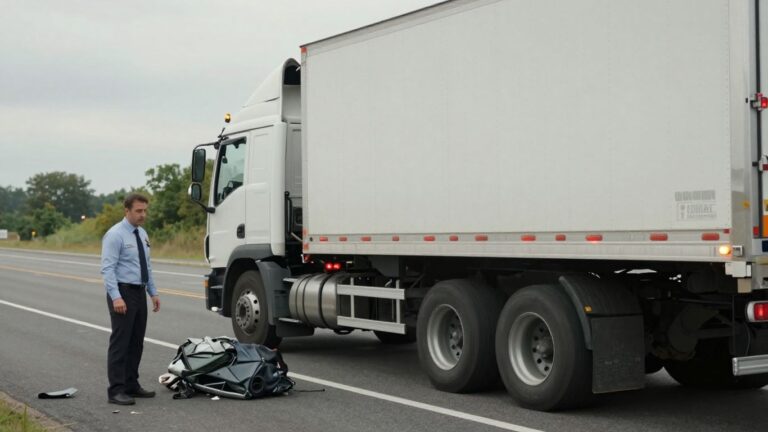

What to Do After a Car Accident While Working: Step-by-Step Guide for 2026
A car accident while working can trigger several overlapping issues at once, including emergency medical care, employer reporting, workers’ compensation, commercial auto insurance, personal auto coverage, and a possible third-party injury claim. The steps you take immediately after the collision can affect which benefits are available and how easily you can prove that the trip was connected to your job.
This guide explains what to do after a work-related car accident, who may be liable, how insurance coverage typically works, and when legal help may be necessary. Because workers’ compensation and liability rules vary by state, every injured worker should confirm local deadlines and claim procedures as early as possible.
Quick Answer: What Should You Do After a Car Accident While Working?
After a car accident during work duties, check for injuries, call emergency services when needed, move to a safe location, and cooperate with law enforcement. Notify your supervisor as soon as possible, document the accident scene and the business purpose of your trip, seek medical evaluation, and report the crash to the relevant insurance carriers. Keep written proof of every report, medical visit, expense, work restriction, and communication because more than one claim may apply.
Do not assume that driving a company vehicle automatically makes the employer liable or that using your own car automatically makes the crash personal. The key questions are usually whether you were acting within the course and scope of employment, who caused the collision, which policies cover the vehicle and activity, and what your state’s workers’ compensation law requires.
For additional guidance, review what to do after a car accident to understand the immediate steps that can help protect your rights after a collision.
Key Takeaways
- Get urgent medical help when necessary and obtain a timely medical evaluation even when symptoms initially seem minor.
- Report the accident to your employer in writing and follow the company’s incident-reporting procedure without waiting for symptoms to worsen.
- Preserve evidence showing both how the crash happened and why you were driving for work at that time.
- Workers’ compensation, commercial auto insurance, personal auto insurance, and a third-party claim may each address different losses.
- An employer may be responsible for an employee’s negligence when the employee was acting within the scope of employment, but state law controls the test.
- A routine commute is often treated differently from travel between job sites, deliveries, business errands, or employer-directed trips.
- Claim deadlines, notice requirements, wage benefits, and subrogation rules vary by state so that prompt local legal advice can be important.
Immediate Steps After a Car Accident While Working

The first hours after an on-the-job crash are important for both health and claim documentation. Follow a calm sequence that protects people first, preserves evidence second, and starts the required reporting process as soon as circumstances allow.
Step 1: Check for Injuries and Call Emergency Services
Inspect yourself and passengers, other drivers, pedestrians, and others involved. If there are injuries, suspected head or spinal injury, extensive damage to the vehicle, traffic is blocked, a hit-and-run has occurred, someone is suspected of being impaired, or any situation appears unsafe, call 911.
Avoid refusing medical treatment just because the crash occurred at work or because a supervisor hasn’t yet given approval for treatment. First aid is a priority. Inform medical practitioners that the injury was sustained on the job, to ensure that the record reflects the initial event.
Step 2: Move to Safety and Cooperate With Law Enforcement
Only move vehicles out of the flow of traffic when it is safe and legal. Switch on the hazard lights, stay clear of other vehicles, and obey police, fire, and emergency medical service personnel.
Provide officers with factual information, not speculation on speed, distance, fault, or injuries that cannot be determined at this time. Get the agency name, incident number, and directions for how to request the completed crash report.
Step 3: Notify Your Employer as Soon as Possible
Notify your supervisor, dispatcher, fleet manager, human resources, or safety officer immediately. Follow any company procedure for a vehicle incident, workplace injury, drug or alcohol testing, towing, medical authorization, or return of the company vehicle.
Even if the notice is given by telephone, make a written report. Include the date, time, location, job assignment, vehicle, known injuries, police report information, and where treated. Save a copy of all work submitted.
Step 4: Document Why the Trip Was Work-Related
If you are involved in a later dispute, it may not be about whether the crash happened, but whether you were performing your work duties. Preserve dispatch messages, delivery records, customer appointments, route logs, timecards, mileage reimbursement records, emails, calendar entries, work orders, or instructions from a manager.
Record the starting point, destination, who asked for the trip, what you were doing, and if any personal stop was made. These facts may be important in a course and scope of employment determination by an insurer.
Step 5: Preserve Evidence From the Scene
Once it is safe to do so, take pictures of all vehicles, license plates, debris, traffic signals, skid marks, road conditions, weather, company markings, cargo, and any visible injuries. Capture wide shots and close-ups.
Swap driver and insurance details, gather witness contact information, and find nearby cameras on businesses, homes, vehicles, or traffic systems. Video can be overwritten rapidly, so please record the location of the camera and ask to preserve the video as soon as possible.
Step 6: Obtain Medical Evaluation and Follow-Up Care
Some symptoms occur after the initial “adrenaline rush” subsides. Follow the provider’s advice for treatment and work restrictions, and seek appropriate evaluation for pain, dizziness, numbness, headache, limited movement, confusion, or new symptoms.
Learn more about delayed car accident symptoms to understand why timely medical evaluation is important after a crash.
Be accurate in describing symptoms; don’t overestimate or underestimate symptoms. Follow-up appointments, keep records of work status notes, and communicate restrictions to the employer via the appropriate channels. Unexplained treatment gaps can create medical and claim disputes.
Step 7: Notify the Relevant Insurance Carriers
The employer can submit the claim to its workers’ compensation carrier and commercial auto insurance company, but don’t assume that all notices have been filled out properly. Request the claim number, adjuster name, and contact details for all claims opened.
If you were driving your own car, inform your personal auto carrier as per the policy conditions and let them know that it was a work trip. Business use can impact coverage, so be sure to give the facts and if coverage is called into question, ask for a written explanation.
Step 8: Create a Complete Accident File
Keep all claim numbers, insurance letters, prescriptions, repair estimates, bills, wage statements, the police report, employer incident report, photographs, witness information, and medical records in one secure folder. Include a dated record of symptoms, lost work, appointments, and conversations.
An organized file helps you deal with adjusters, fix mistakes, estimate losses, and meet deadlines promptly. It also assists an attorney in assessing the case effectively in case liability or benefits are challenged.
Maintaining organized records is also helpful when preparing a personal injury demand letter or evaluating whether a third-party injury claim may be available after a work-related crash.
Who Is Liable for a Car Accident While Working?
Ownership is not enough to be held liable. Typically, the courts and insurers look at who was at fault, if it was the driver (whether employee or independent contractor), and if he or she was performing duties in the scope of the employment at the time of the collision. State law provides the test, and the same facts can be dealt with differently in different jurisdictions.
Workers’ compensation is a benefit system based on employment, and a worker can have a workers’ compensation claim for personal injuries even if the worker was a contributing factor to the crash. However, separate liability claims will remain subject to fault and relevant comparative-negligence principles.
When the Employer May Be Vicariously Liable
The doctrine known as “respondeat superior” holds an employer liable for the negligent driving of an employee when the driving is within the scope of the employment. This can involve deliveries, travelling between job sites, moving equipment, visiting clients, or doing an errand that a manager has asked you to do.
The employer does not assume the responsibility for all acts that take place during paid time. Whether a substantial personal detour, prohibited personal use, intentional misconduct, or activity unrelated to the employer’s business is outside the scope of employment will depend on state law and the facts.
If another person caused the accident, the injured worker may have options beyond workers’ compensation. Understanding potential recovery options is similar to evaluating other injury claims, such as those discussed in how much a car accident settlement may be worth.
When Another Driver Caused the Crash
If the accident was caused by an unrelated driver, then the injured employee may be able to file a third-party claim against the driver or other responsible party. The claim may ask for damages that are not covered by workers’ compensation, such as non-economic damages (if permitted by law).
Workers’ compensation and third-party claims may run concurrently, with reimbursement or lien rights applying. Before settling a case, it is important to know how medical benefits, wage payments, attorney fees, and insurer recovery rights will be dealt with.
When the Employee Was Driving a Personal Vehicle
Driving one’s own car does not mean that the trip is not part of the scope of employment. The trip may still be work-related if the employee was delivering, going to an off-site meeting, traveling between work sites, or doing an assigned errand.
Coverage may be more complex due to possible overlap between the employee’s personal auto policy, the employer’s non-owned auto policy, commercial liability insurance, and workers’ compensation. Policy language is important because of the personal policies that may restrict or prohibit certain business uses.
Before accepting any settlement, injured workers should understand possible medical liens, insurance rights, and claim value. Reviewing information about average personal injury settlement amounts can help explain how different factors may influence recovery.
Ordinary Commutes, Special Errands, and Business Travel
The going and coming rule typically excludes a normal commute between home and a fixed place of work from workers’ compensation coverage. Exceptions include, but are not limited to, employer-provided transportation, paid travel, special errands, traveling between job sites, or a traveling employee.
These exceptions are very state-specific. Employees should keep the employer’s instructions and should not presume that a crash was or was not covered just because it happened before or after the start/end of the workday.
Work-Related Travel Scenarios Compared
Before looking at the summary table, identify the business purpose of the trip, the employer’s level of control, who benefited from the travel, and whether the employee substantially departed from the assignment. These facts often matter more than whether the employee was paid hourly at the exact moment of impact.
- Travel between customers, job sites, deliveries, and assigned errands is commonly connected to work duties.
- A routine commute is often treated as personal travel, but exceptions may apply.
- A company vehicle supports a work connection but does not decide the issue by itself.
- A personal detour may temporarily or completely remove the driver from the scope of employment.
- Independent-contractor status can change both liability and workers’ compensation coverage.
The table below is a general comparison only. State law, employment contracts, company policy, and the exact route or assignment can change the result.
| Travel Situation | Typical Legal Question | General Treatment |
| Delivery or customer visit | Was the employee performing an assigned business task? | Often considered within the course and scope of employment. |
| Travel between job sites | Was travel necessary to complete the workday? | Often work-related for workers’ compensation and liability analysis. |
| Ordinary commute | Was the trip only between home and a fixed workplace? | Often excluded, subject to state-specific exceptions. |
| Special errand before or after shift | Did the employer request or benefit from the trip? | May qualify as work-related even outside normal hours. |
| Personal detour during assignment | How substantial was the deviation from business duties? | Minor deviations may remain covered; substantial personal activity may not. |
| Independent contractor trip | Was the driver truly independent and what insurance applied? | Fact-specific and may fall outside employee workers’ compensation coverage. |
Because “scope of employment” is not governed by one nationwide rule, workers should avoid relying on a supervisor’s informal opinion. A claims professional or attorney can review the facts under the law of the state where the accident occurred.
How Insurance Works After a Work-Related Car Accident

Several policies can react to the same event, but they typically cover different people and losses. Workers’ compensation is for an employee’s injury, Auto Liability is for injury to others, Physical Damage is for damage to the vehicle, and a third-party policy might pay if the other driver was responsible.
Coverage order is determined by state law, policy language, vehicle ownership, business use, fault, and employment status. Don’t assume that one carrier will coordinate everything automatically, but have claim numbers and written coverage positions.
When insurers dispute responsibility or deny benefits, understanding the claims process becomes important. Read more about what to do if your injury claim is denied by insurance for information about handling claim challenges.
Workers’ Compensation Benefits
Workers’ compensation is governed by state law for employees of the private sector and state or local governments. Typical benefits are fair medical care, partial wage replacement, disability benefits, rehabilitation, and death benefits, which are subject to eligibility requirements, benefit amounts, provider requirements, and time limits.
Typically, workers’ compensation does not include pain and suffering damages. This may still be the case if the employee caused the accident, depending on the statutory exceptions and state-specific defenses.
Because multiple claims may exist at the same time, injured workers should understand how insurers evaluate responsibility. A review of how long a personal injury case takes can provide insight into factors that may affect the timeline of a related claim.
Commercial Auto and Employer Vehicle Coverage
Company-owned vehicles, liability to third parties, and sometimes hired or non-owned vehicles may be included in commercial auto insurance. It can also offer increased limits or endorsements for deliveries, transportation, equipment, or employee driving.
The policy will cover the cost of repairs to the vehicle, defense costs, and liability claims, but it will not be a replacement for the workers’ compensation benefits that the injured employee is entitled to receive. Coverages, driver authorization requirements, and reporting needs should be reviewed.
Personal Auto Insurance and Business Use
If an employee uses a personal vehicle for work, the personal auto carrier may determine if the activity is covered by the policy’s “for business” clause. Some personal policies limit commercial delivery, passenger-for-hire, or other business activities or may have different rules for ordinary commuting.
The employer may also have hired and non-owned auto coverage, but that coverage is not universal and may cover the business more than the employee’s vehicle. The employee should request that each carrier specify what coverage they are accepting or rejecting.
Uninsured Motorist, Underinsured Motorist, PIP, and Medical Payments
Uninsured or underinsured motorist coverage can come in handy if the at-fault driver doesn’t have coverage or if their policy limits are too low. Personal injury protection or medical-payments coverage may also cover some medical or wage losses, depending on state law and policy terms.
These benefits may overlap with workers’ compensation and health insurance. Prompt notice and careful documentation are important as policy deadlines and consent requirements may impact recovery.
Workers’ Compensation vs. Auto and Third-Party Claims
Start by separating the losses into categories. The employee’s medical treatment and wage loss may be addressed through workers’ compensation, vehicle damage may be handled through auto coverage, and full negligence damages may be pursued against an at-fault third party where the law permits.
- Workers’ compensation usually focuses on job-related injury benefits rather than proving negligence.
- Commercial or personal auto insurance may address vehicle damage and legal liability arising from vehicle use.
- A third-party claim requires proof that someone outside the employer-worker relationship caused or contributed to the crash.
- The worker generally cannot receive duplicate payment for the same loss, and reimbursement rights may apply.
- Settlement language should account for medical liens, benefit repayment, future care, and wage-loss calculations.
| Claim or Coverage | Primary Purpose | Commonly Addresses | Important Limitation |
| Workers’ compensation | Work-related injury benefits | Medical treatment, partial wage replacement, disability, rehabilitation | State-specific and usually no pain-and-suffering award |
| Commercial auto policy | Business vehicle liability and damage | Third-party injuries, property damage, company vehicle repairs | Depends on covered vehicle, driver, and business use |
| Personal auto policy | Personal vehicle risks | Liability, collision, medical or UM/UIM benefits if applicable | Business-use restrictions or exclusions may apply |
| Third-party injury claim | Negligence damages against an outside party | Medical costs, full wage loss, pain and suffering, other damages allowed by law | Requires proof of fault and may be subject to liens or subrogation |
An accurate claim strategy identifies every potentially responsible party without overstating coverage. When multiple insurers are involved, written communication and a single organized loss summary help prevent inconsistent statements and missing documents.
How to File a Claim After an On-the-Job Car Accident

Filing a work-accident claim is a process rather than a single form. The employee must usually provide timely notice to the employer, complete the state or carrier paperwork, document medical treatment and disability, cooperate with reasonable investigation requests, and separately preserve any claim against an outside driver.
For additional information about reporting requirements after a collision, see how long you have to report a car accident, as deadlines may vary depending on the circumstances and location.
Step 1: Submit Written Notice to the Employer
Give written notice that includes identification of the accident, the work assignment, injuries, treatment location, and missed work. Request confirmation of receipt from the employer and obtain the workers’ compensation carrier, claim number, medical authorization, and state claim forms.
A verbal discussion with a supervisor should not be the only way to communicate. State notice deadlines are often short, and a written record provides documentation of when the employer was notified of the injury.
Step 2: Complete the Workers’ Compensation Process
Follow the procedures for the state where the employment injury is covered. This can involve submitting to a state board, going to an approved provider, an independent medical exam, wage records, or a request for information from a carrier.
Most claims from the private sector and state or local government are processed at the state level. Other federal programs may apply to federal employees and some specialized workers that have different forms and deadlines.
Step 3: Open the Appropriate Auto Claims
Report the collision to the owner’s auto insurer and any other potentially applicable carrier. Provide the police report number, vehicle information, photographs, repair location, and factual details about the work purpose of the trip.
Ask whether the carrier is handling liability, collision damage, rental transportation, medical payments, uninsured motorist coverage, or another benefit. Keep each claim number separate to avoid confusion.
Step 4: Preserve the Third-Party Injury Claim
If an outside driver, vehicle owner, contractor, manufacturer, or roadway entity may be liable, keep evidence and determine the limitation period. Workers’ compensation negotiations do not necessarily extend the deadline for a civil claim.
Before signing a third-party release, be sure to know if the workers’ compensation carrier has a lien, credit, or reimbursement right. The settlement check is not the only thing that can be impacted by a release.
Step 5: Document Wage Loss and Work Restrictions
Obtain pre-accident wage statements, tax records (if applicable), overtime history, commission records, employer attendance records, and medical work-status notes. Document missed shifts, decreased hours, light duty, and transportation costs.
The amount of wage benefits that workers’ compensation will pay may be a statutory percentage of earnings, while a third-party claim may be based on a different measure. Records must be kept to ensure that both are not double-counted.
What Compensation May Be Available?
The available recovery depends on the claim type. Workers’ compensation benefits are defined by state statute, while a negligence claim against a third party may allow broader damages. Vehicle damage and personal injury may also be handled through different adjusters or policies.
Medical Treatment and Rehabilitation
Workers’ compensation can cover authorized and reasonable treatment for the work injury, such as emergency care, follow-up appointments, prescriptions, therapy, diagnostic testing, and rehabilitation. The rules governing provider choice and authorization vary from jurisdiction to jurisdiction.
The costs of past and reasonably foreseeable future medical treatment can also be claimed under a third-party claim. Medical records should tie treatment to the crash and provide any future recommendations.
Lost Wages, Disability, and Reduced Earning Capacity
Workers’ compensation might offer temporary or permanent disability benefits that are based on state law. These benefits may only pay a portion of the employee’s wages and can be impacted by return to work or suitable light duty work.
When supported by employment, medical and vocational evidence, a third party claim may seek additional past wage loss and loss of future earning capacity. The calculation must be based on real restrictions and not on assumptions.
Pain, Suffering, and Other Non-Economic Losses
In general, workers’ compensation does not provide for damages for pain, suffering, inconvenience, or loss of enjoyment of life. Depending on the state law and evidence, these losses could be recoverable in a valid third-party negligence claim.
A symptom journal, treatment history, family observations, photographs, and testimony of daily limitations are all helpful in documenting non-economic harm, but there is no formula for determining a specific value.
Property Damage and Out-of-Pocket Expenses
Damage to vehicles, towing, storage, rental transport, damaged tools, cargo, and other property loss may be covered by auto insurance or a third-party property claim. Maintain invoices, photos, valuation records, and payment receipts.
Vehicle expenses should not be included in the workers’ compensation file unless the program specifically covers these expenses. Settlement accounting is clearer when using separate documentation.
Subrogation, Liens, and Avoiding Double Recovery
If the workers’ compensation or another benefit plan pays expenses as a result of a third party, the benefit plan could have a statutory or contractual right to reimbursement from a subsequent settlement. The number and reduction requirements differ from state to state and program to program.
If you are being offered a settlement, obtain a statement of the current lien or payment statement and consider attorney fees, costs, future benefits, and allocation of settlement to determine net recovery. The gross settlement is not the same as what the injured worker retains.
Common Mistakes to Avoid After a Work-Related Crash
Many claim problems begin with missing documentation or assumptions about which insurer is responsible. The safest approach is to report promptly, remain factual, follow medical advice, and preserve every claim option until coverage and liability are clear.
- Waiting to notify the employer because the injury initially seems minor.
- Failing to document the specific work task, route, dispatch, or manager instruction connected to the trip.
- Assuming a company vehicle automatically establishes employer liability or workers’ compensation coverage.
- Assuming a personal auto policy covers all business driving without reviewing exclusions.
- Giving inconsistent descriptions of the trip to the employer, police, doctors, and insurers.
- Missing treatment appointments or ignoring medical work restrictions.
- Posting accident details, physical activities, or settlement discussions publicly on social media.
- Accepting a quick third-party settlement before the medical prognosis and benefit liens are understood.
- Missing a state notice, claim, appeal, or lawsuit deadline while carriers continue negotiating.
- Signing a release, resignation, or medical authorization without understanding its scope.
A mistake does not always destroy a claim, but early correction is easier than trying to reconstruct evidence months later. Ask for written confirmation whenever a supervisor or adjuster gives an important instruction or coverage decision.
Special Work-Driving Situations
Some work arrangements require additional analysis because the employee, employer, platform, and vehicle owner may not fit a traditional relationship. These scenarios should be documented carefully and reviewed under the law and policies that apply to the particular worker.
Rideshare, Delivery, and App-Based Work
Rideshare and delivery companies might offer varying coverage amounts based on app status (off, on, assigned to ride, carrying a passenger or order). The typical personal auto policy excludes transportation-for-hire or commercial delivery.
There can also be disagreements regarding whether the platform worker is an employee or an independent contractor. Capture app logs, trip status, acceptance times, route information, and platform communications as soon as the crash occurs.
Federal Employees
Federal employees can receive benefits under the Federal Employees’ Compensation Act instead of a state workers’ compensation program. The federal claim procedures, forms, provider rules, and third-party recovery requirements may vary from state programs.
A company incident report is not the only way to notify a federal employee of a process that should be reviewed in a timely fashion in the applicable Office of Workers’ Compensation Programs process.
Independent Contractors and Owner-Operators
Independent contractors are not eligible for employee workers’ compensation benefits, but classification of an independent contractor may be challenged, and some contractors purchase occupational accident or workers’ compensation insurance. Other commercial auto, motor-carrier, lease, and contract provisions may also apply.
Don’t take the label of the contract for granted. Classification and liability may be influenced by actual control, work structure, statutory rules and the insurance arrangements of the parties.
Accidents in a Company Vehicle Outside Normal Hours
If the employer had a need for the vehicle to be available after hours, the employee was on call, or the trip was for a business purpose, then it may be considered a work-related trip. The results may vary if used for personal purposes.
Maintain written vehicle use policies, on-call schedules, dispatch logs, and trip justification. The answer to the coverage question is not just the time of day.
When to Contact a Work Accident or Personal Injury Lawyer
Not every minor collision requires legal representation, but overlapping insurance and employment issues can make early advice valuable. A lawyer can identify claim deadlines, preserve third-party evidence, coordinate benefit liens, and challenge an improper denial.
- The accident caused hospitalization, surgery, fractures, head injury, permanent impairment, or extended time away from work.
- The employer denies that the trip was work-related or pressures you not to report the injury.
- The workers’ compensation carrier denies treatment, wage benefits, or the entire claim.
- Another driver caused the crash,h and a third-party settlement may be available.
- Your personal insurer denies coverage because of alleged business use.
- The employer, vehicle owner, leasing company, platform, or contractor disputes responsibility.
- You receive a settlement offer or release before your medical condition is stable.
- Multiple states, federal employment, rideshare work, commercial trucking, or independent-contractor classification is involved.
- A filing, notice, appeal, or limitation deadline may be approaching.
Early consultation does not require immediate litigation. It can simply provide a roadmap for reporting, medical documentation, insurance communication, and protection of all available claims.
Legal support may be especially important when the accident involves serious injuries, denied benefits, or a dispute over responsibility. Similar considerations apply in cases involving what to do after a workplace injury, where documentation and timely reporting can affect available benefits.
Work-Related Car Accident Document Checklist
A complete file gives insurers and legal professionals the evidence needed to understand the crash, work assignment, injuries, and financial impact. Start collecting documents immediately and continue updating the file throughout treatment and claim handling.
- Police crash report, incident number, citations, and officer information.
- Employer incident report, written notice, safety forms, and workers’ compensation claim number.
- Dispatch records, work orders, timecards, route logs, emails, texts, app data, and mileage records.
- Photographs, videos, dashcam files, vehicle data, witness information, and camera locations.
- Medical records, bills, prescriptions, work restrictions, referrals, and appointment history.
- Pay stubs, overtime or commission records, tax documents when relevant, and missed-work calculations.
- Commercial auto, personal auto, UM/UIM, PIP, medical-payments, and health-insurance information.
- Vehicle repair estimates, towing and storage bills, rental receipts, and damaged property evidence.
- All correspondence, coverage letters, recorded-statement requests, settlement offers, and releases.
- A dated symptom, expense, and communication log.
Keep original documents and create secure digital copies. Use consistent file names with the date and document type so the information can be located quickly when a carrier, doctor, employer, or attorney requests it.
If an insurance company requests information or evaluates liability, understanding the role of an adjuster can help. Learn more about the process through insurance claims adjusters and how they handle accident-related claims.
Final Verdict
The most effective approach after a car accident on the job is to consider the incident as a traffic accident and a work injury. Safeguard health, prepare a written employer’s report, maintain evidence of the work assignment, inform all potentially liable insurers, and maintain a well-defined workers’ compensation and third-party claim process.
Avoid making assumptions about company vehicles, commuting, fault, or insurance priority. The language of the state law and policy can make a difference, and a timely review is particularly crucial in the event of injuries being severe, coverage not being provided, or another driver being at fault.
Whether the matter involves workers’ compensation, another driver’s negligence, or a disputed insurance claim, reviewing resources like what to do after a car accident while working can help injured workers understand their next steps.
Frequently Asked Questions
Is a car accident during work automatically covered by workers’ compensation?
No. The injury generally must arise out of and occur in the course of employment under the law of the applicable state or federal program. The trip purpose, work assignment, employment status, and any personal deviation can affect coverage.
Does it matter whether I was driving a company car or my own car?
Vehicle ownership matters for insurance, but it does not decide whether the trip was work-related. An employee using a personal vehicle for an assigned delivery or client visit may still be acting within the scope of employment.
Is my normal commute covered?
A routine trip between home and a fixed workplace is often excluded, but exceptions can apply for special errands, paid travel, employer-provided transportation, required vehicle use, traveling employees, or trips between job sites. State law controls.
Can I receive workers’ compensation if I caused the accident?
Workers’ compensation is generally not based on ordinary negligence, so an employee may still qualify even when partially responsible. Intentional conduct, intoxication, serious misconduct, and other statutory defenses may affect benefits depending on state law.
Can I file a claim against the other driver and receive workers’ compensation?
Potentially yes. An injured worker may have both a workers’ compensation claim and a third-party claim against an outside driver. The workers’ compensation carrier may have reimbursement or lien rights against the third-party recovery.
Does workers’ compensation pay pain and suffering?
Workers’ compensation generally pays statutory medical and wage-related benefits rather than pain-and-suffering damages. Non-economic damages may be available through a valid third-party personal injury claim.
Should I give the insurance company a recorded statement?
You should cooperate with legitimate claim investigations and provide accurate information, but understand which insurer is asking, why the statement is requested, and how it may affect overlapping claims. Legal advice may be helpful before a detailed recorded statement in a serious or disputed case.
What if my employer asks me not to report the accident?
Preserve the request and report the injury through the appropriate written process. State law may protect workers from retaliation for exercising workers’ compensation rights, but the available remedy and procedure vary by jurisdiction.
What if my personal auto insurer says business use is excluded?
Request the denial and cited policy language in writing. Notify the employer’s commercial or non-owned auto carrier and consider legal review, because coverage may depend on the exact work activity and policy wording.
How long do I have to file a claim?
There is no single nationwide deadline. Employer notice, state workers’ compensation claims, insurance notices, appeals, and third-party lawsuits may each have different deadlines. Start the process immediately and confirm the applicable rules.
Who pays for damage to my personal vehicle used for work?
Payment may come from your collision coverage, the employer’s policy if applicable, or the at-fault driver’s insurer. Workers’ compensation usually focuses on bodily injury benefits rather than vehicle damage.
Can my employer fire me after I file a claim?
Employment and anti-retaliation protections vary by state and situation. Workers should document adverse actions and obtain advice if discipline, reduced hours, or termination appears connected to reporting the injury or seeking benefits.