

What Does it Mean When a car is Totaled? Full Explanation, Your Options & What Happens Next
When your car is declared a total loss, it can be confusing. Here are the main things to remember:
Key Takeaways
- A car is “totaled” when the cost to fix it is more than the car is actually worth.
- This can happen from accidents, floods, fires, or other major damage.
- Insurance companies figure this out by comparing repair costs to the car’s value, often using state rules.
- You might get to keep the car, but it will get a “salvage” title.
- If you don’t agree with the insurance company’s offer, you can try to negotiate or provide your own proof of value.
What Does “Totaled” Actually Mean?
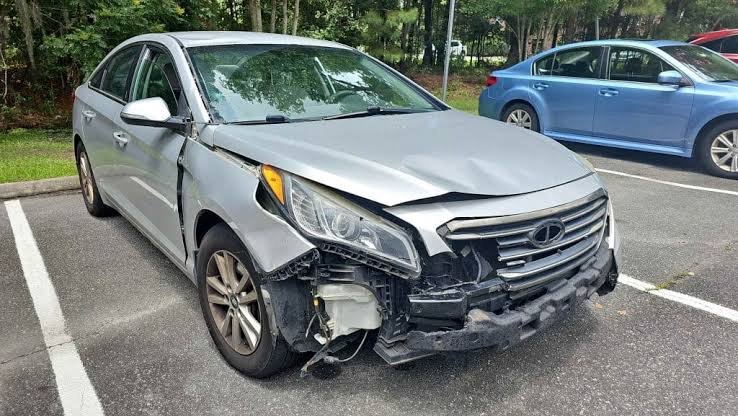
When I initially heard the term “totaled” from the insurance adjuster about my car, quite frankly, I had no clue as to what it entailed. Now, it sounds like a final assessment.
The thing is, it simply indicates that the repair cost of the damages done to the car is higher than its market value.
In other words, it does not mean the car is damaged to such an extent that there is no way of making it usable again; it simply is not economically viable for the insurance company.
There are many possible reasons for this to occur. An accident is definitely one of them, but there are other possibilities such as flooding, fire, or even hail that might damage a vehicle so badly that it’s classified as totaled.
If your vehicle was recently involved in a collision, it’s important to understand what to do after a car accident before dealing with the total-loss process.
The situation is hard, and one begins to wonder what he should do about it. Having a good understanding of this definition will be crucial when trying to deal with situations like this one. One could compare this process to the decision of buying a new appliance or repairing the old one.
The core idea is that the expense of repairs outweighs the vehicle’s value, making it an uneconomical decision to fix.
There are a few key things that go into this decision:
- Repair Costs: This is the estimated amount it would take to fix all the damage, including parts and labor.
- Actual Cash Value (ACV): This is what your car was worth just before the accident. It’s not what you paid for it, but what it could have been sold for on the open market.
- State Thresholds: Many states have specific rules. Sometimes, if the repair costs hit a certain percentage (often around 70-80%) of the car’s value, it’s automatically considered totaled, even if the exact repair quote is slightly less.
One needs to keep in mind that this is an economic decision made by the insurance company. The decision revolves around the calculations made by the insurance company as to whether writing off the amount for which the car was sold is a more economical choice than repairing it. One can get further insights into such decisions from other sources.
How Do Insurance Companies Decide if a Car Is Totaled?

As far as I know, it is quite difficult to predict whether the insurance company will rule that my car has been totaled in a recent fender-bender. There is actually a common way to determine when the insured auto has reached its total loss status, which depends mostly on finances.
In particular, the insurance adjuster makes sure that there are only two factors to be taken into account: the estimated cost of repairs and the actual cash value (ACV) of the auto before the accident occurred.
Understanding the role of an insurance claims adjuster can help you better understand how these calculations are made.
The ACV can be considered the current market value of the car that you do not have to include a debt in a loan payment agreement with a financial institution. In the case where the repair cost exceeds the value of the car, it becomes totaled.
There are some other aspects to be taken into account. State regulations usually provide for something like that. A number of states use what they call “total loss threshold.” It means that once repair costs reach a certain percentage of a vehicle’s value, such as 70% or 75%, regardless of whether it’s a little lower than that in reality, a car is considered totaled.
Here is what they look at:
- Repair Cost Estimate: This is the detailed breakdown of what it would cost to fix all the damage from the accident. It includes parts, labor, and any other associated fees.
- Actual Cash Value (ACV): This is the market value of your car just before the incident. Insurers use various sources, like vehicle history reports and local market data, to figure this out.
- State Laws and Thresholds: As I mentioned, each state has its own regulations. Some might have a specific dollar amount or a percentage of the ACV that triggers a total loss declaration.
- Vehicle Condition: While ACV is the main number, the overall condition of the car before the accident can also be a minor factor. A car that was already in rough shape might be more likely to be totaled.
The decision isn’t arbitrary. It’s a formula based on repair costs versus the car’s pre-accident worth, often guided by specific state regulations. My adjuster showed me the numbers, and it made sense why they couldn’t just fix it.
Other times, when they don’t see eye-to-eye with your valuation, they might present some evidence that backs up their point.
For example, you could provide quotes for repairs from another shop or documentation of any upgrades you’ve made to the vehicle recently. If there is a suspicion that an insurance company is undervaluing a car, then it is worth researching how it comes to that decision.
What Happens After Your Car Is Declared Totaled?
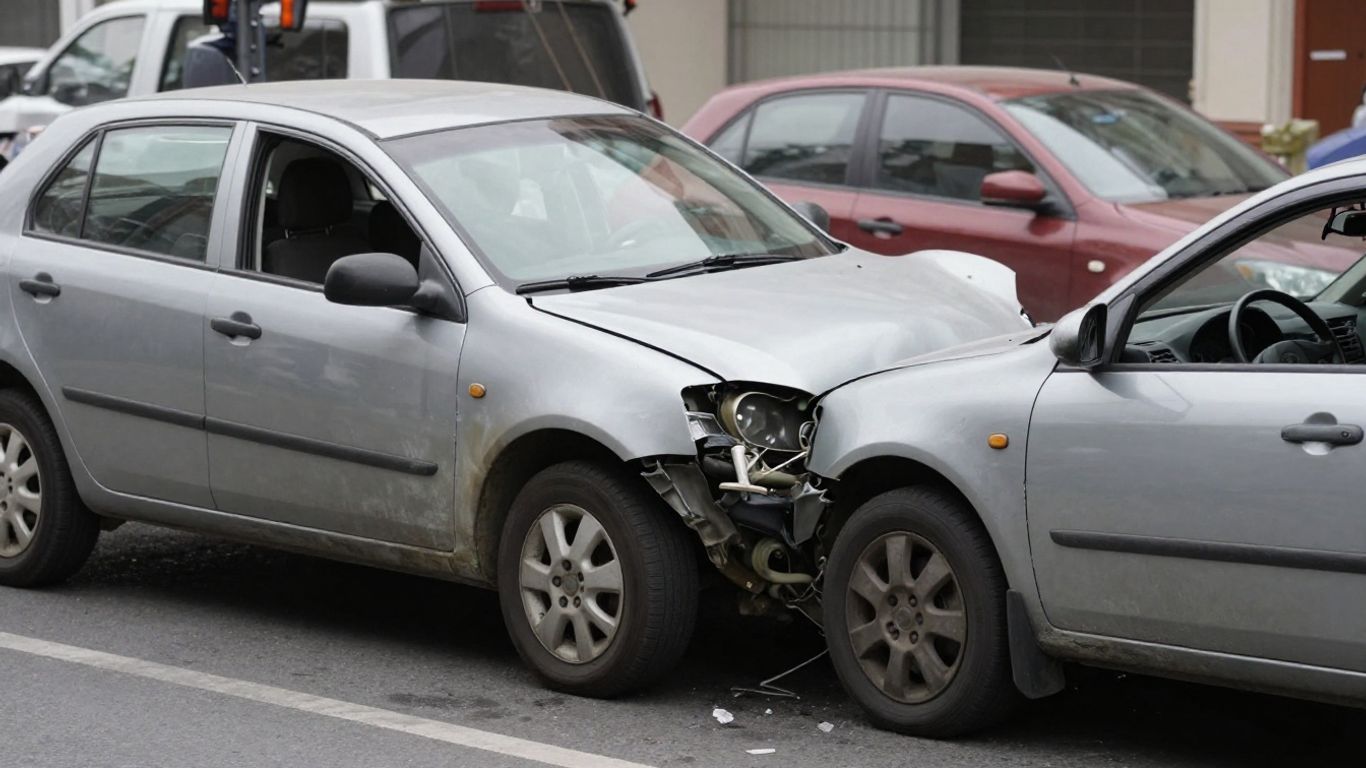
Alright, now your vehicle has been declared a total loss. This is certainly not great news, but sometimes things just happen.
The insurance provider has concluded that repairing the vehicle would cost too much compared to its previous value. So, what will be the next step? First of all, an insurance claims adjuster will contact you fairly soon.
This person will explain the process in detail and tell you that the damage has been appraised. In other words, the vehicle’s ACV (Actual Cash Value) will be discussed. This figure plays a pivotal role, especially if you have an unpaid car loan, as it influences the settlement.
More information about the ACV of vehicles may be obtained through researching how auto insurance providers value cars.
Here’s a general rundown of what I’ve seen happen:
- Settlement Offer: TThe insurance company will present you with a settlement offer based on that ACV. If you’re wondering whether the amount offered is reasonable, understanding how much a car accident settlement is worth can provide useful context before accepting an offer.
- Deductible: If you have collision or comprehensive coverage, your deductible will typically be subtracted from the settlement amount. This is the portion you’re responsible for paying out of pocket.
- Lender Payout: If you have a loan or lease on the car, the insurance check might go directly to your lender. If the ACV is less than what you owe, you might still be on the hook for the difference, unless you have gap insurance.
- Title Transfer: Once you accept the settlement, the insurance company will handle the process of taking ownership of the car, which involves transferring the title. They’ll usually want the car off your hands pretty quickly.
- Personal Belongings: Make sure you retrieve all your personal items from the car before the insurance company takes it. Seriously, don’t forget anything important!
It’s important to remember that the insurance company’s first offer might not always be the highest amount they’re willing to pay. Don’t be afraid to do your own research on your car’s value and negotiate if you think the offer is too low. Having records of recent maintenance or upgrades can really help your case.
When the fault lies on the other party’s end, it becomes the liability of their insurance company to pay for your damages.
This could cover even the charges for renting a car until the case is settled, which is a great deal for you at such a difficult period. It is best to know your rights when the fault does not lie on your end.
How Much Money Will You Get if Your Car Is Totaled?
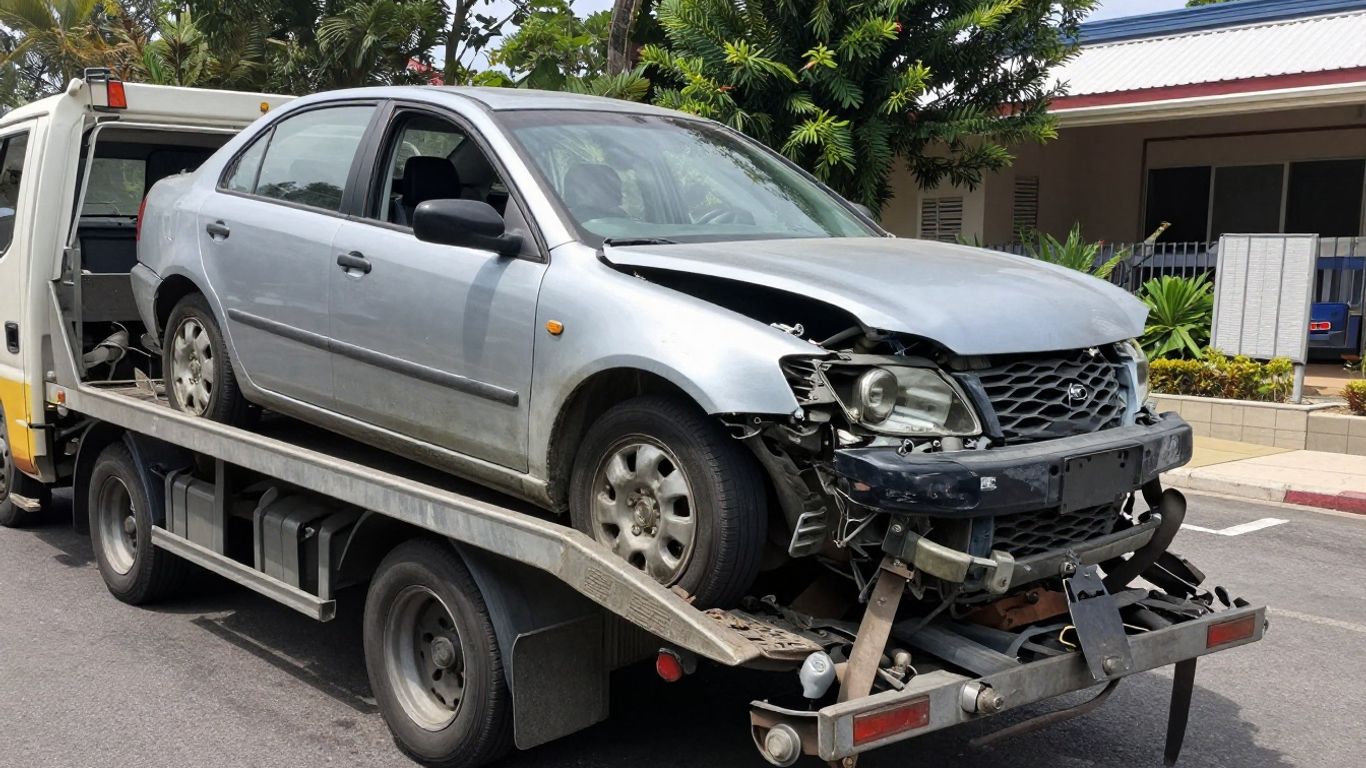
Your car has been totaled. What does this mean for compensation? It does not involve getting paid for whatever you thought the value of your car to be.
Instead, it will depend on the actual cash value of your car just before the incident occurred. In other words, the value of your car at that precise moment. This will consider the age of your vehicle, its mileage, condition, and all its components.
Let us get down to the nitty gritty details of what that means:
- Market Research: Insurers will look at recent sales of similar vehicles in your local area. They’re trying to find cars that match yours in terms of make, model, year, mileage, and overall condition. This is probably the biggest factor in determining the ACV.
- Condition Assessment: They’ll consider your car’s pre-accident condition. Was it well-maintained? Did it have any existing mechanical issues or cosmetic flaws? These things can affect the value.
- Deductible Subtraction: Whatever the ACV comes out to, you’ll need to subtract your insurance deductible from that amount. So, if your car’s ACV is determined to be $10,000 and your deductible is $500, the payout you’d receive directly is $9,500.
- Lender Payout: If you still owe money on your car, the insurance check might go directly to your lender. If the ACV is less than what you owe, you might still be on the hook for the difference, unless you have gap insurance.
It should be noted that the first offer does not always reflect the last offer. Many policyholders negotiate for a higher payout, especially when comparable vehicle values support their position. Reviewing average personal injury settlement amounts can also help you understand how insurance settlements are commonly evaluated.
This appeal can consist of providing information such as repair quotes, maintenance records, or similar cars sold in your vicinity, which will help justify why you want more money for the damage done to your vehicle. Even asking for the “Total Loss Valuation Report” might give you some leverage.
The goal is to get you back to the financial position you were in just before the incident. This means the payout should reflect what your car was truly worth on the open market, not just what the insurer initially proposes.
In case you bought or leased the vehicle, the insurer will normally pay the creditor initially. Once all debts have been settled, if there are funds left, they will go into your account.
You should definitely know the payoff amount on your loan/lease since it helps to compare it against the offer for ACV. Knowing the actual cash value calculation is important in order to negotiate a better deal.
Your Options When Your Car Is Declared Totaled
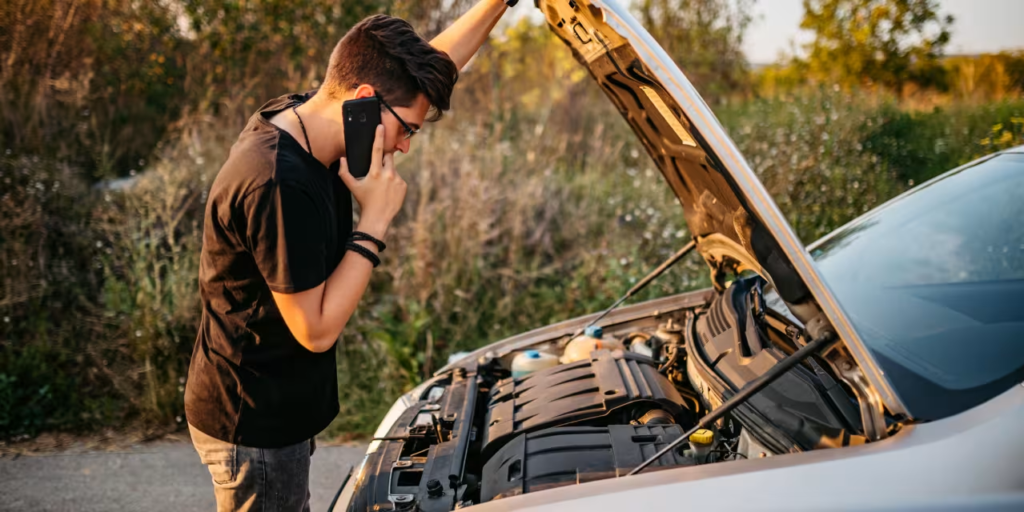
Therefore, your vehicle has been totaled. I understand how frustrating that may be. At this point, you may be thinking about what steps should be taken next, and how you can help yourself. However, do not just settle for the first option presented to you – there are more things you need to know.
Option 1 – Accept the Settlement and Let the Insurer Take the Car
This is probably the easiest route to take. The insurance company will offer you an amount called the actual cash value (ACV), which represents the value of your car prior to the accident.
The insurance company pays the creditor first, and whatever money remains after that goes to you. If there is an outstanding balance on your auto loan and the car’s value does not cover it, gap insurance is usually required.
Accepting the settlement means handing over your totaled car to the insurance company. You’re then free to start looking for a new car.
Option 2 – Keep the Car and Take a Reduced Payout
In some cases, you may not mind that much about how bad the car is, or perhaps the vehicle has some sentimental value to you.
In such a scenario, it is possible to bargain and retain the totaled car. The insurance firm will still provide you with the actual cash value but will deduct from it what it could earn if it were to sell the car as a salvage.
As a result, your payment will be less as compared to the situation when they take possession of the car. It is now left to you how to deal with the ruined vehicle.
Option 3 – Repair the Car Yourself and Get a Salvage Title
It’s somewhat like Option 2, only approached from a different perspective. You inform the insurance company that you intend to retain the vehicle and receive the amount of money less the amount for salvage.
You then use the funds to perform the necessary repairs on your own. Just be careful to understand that by going this route, you will receive what is known as a salvage title on the car. This means that the vehicle has been classified as a total loss, which limits its driving capacity in certain locations.
Option 4 – Appeal the Total Loss Decision
Suppose you feel that the estimate provided by your insurer is completely off. In that case, you do not have to accept it. In some situations, disputes over valuation or denied compensation may require you to understand what to do if your injury claim is denied by insurance.
You may collect all documents necessary, such as repair quotes from external mechanics, receipts regarding any work done or improvements made to your vehicle, and price quotations for similar models sold in your area.
Bring all of the data to the attention of the claims adjuster from your insurance company. There is also an option to use an appraisal clause within your insurance contract.
It’s really important to understand that the insurance company’s first offer isn’t always the final word. You have rights and options, and doing a little homework can make a big difference in the outcome.
Salvage Title vs Rebuilt Title – What Is the Difference?
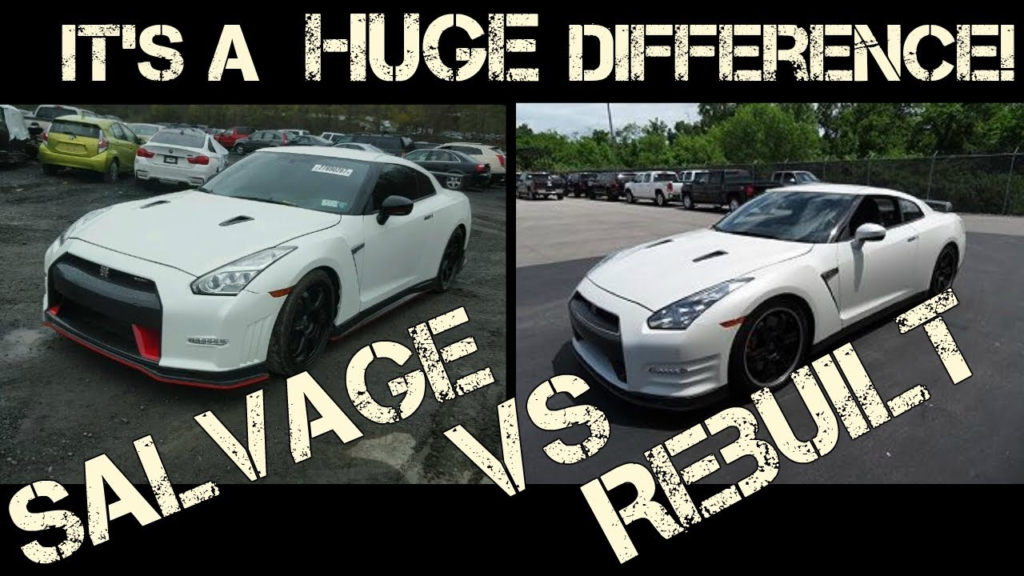
Well, you have just been told that your car is totaled. And now comes the question of title. This can get really tricky. But don’t forget about the difference between the salvage title and rebuilt title. Though both of them are somehow connected to each other, these are two entirely different things regarding the state of your car.
The thing is that a salvage title is issued for a car that has become too costly to repair. It shows that there was an accident, flooding, fire, whatever made repairs cost too much to do. Such a car had to go through some tough situations indeed.
A salvage title is essentially a warning label. It tells potential buyers that the vehicle has been declared a total loss by an insurer and has significant damage. It doesn’t necessarily mean the car is undrivable, but it does mean it’s been through a major event.
The rebuilt title comes after the restoration of a vehicle which had already received a salvage title. In case you choose to salvage your totaled vehicle by repairing it, or in any way another person decides to rebuild the totaled vehicle, he has to undergo an extensive testing procedure before receiving the new title.
After meeting all requirements for a vehicle to be roadworthy, and passing this test successfully, the title will be changed to ‘rebuilt,’ meaning the vehicle has undergone complete restoration.
Let us have a quick look at the differences:
- Salvage Title: Assigned when a car is declared a total loss. Indicates major damage. Resale is difficult, and it usually can’t be legally driven on the road without further steps.
- Rebuilt Title: Assigned after a car with a salvage title has been repaired and passed a state inspection. The car is considered drivable, but it still has a branded title showing its past damage.
It is imperative that one is aware of the differences between total loss and salvage title cars as this can be quite critical, especially in the case of a person who intends on retaining his or her totaled vehicle.
One has to do research on the specific laws governing salvage titles in his or her particular state because laws pertaining to salvage titles may differ widely depending on the location. Some states have stricter requirements regarding the titling and registration of rebuilt cars than others.
Common Misconceptions About a “Totaled” Car
It’s not surprising for people to be confused when their cars are written off as totaled. I was certainly surprised when I found out what it meant.
The term “totaled” makes one think that the car is totally broken down, making it impossible to repair. However, this is not true in all cases. In most cases, it simply means that repairing the vehicle costs more than its value.
For instance, if you have a car that is valued at $5,000, but the cost of repairs is $6,000, then the car can be considered totaled.
One myth that I have heard is that you automatically receive a brand new vehicle courtesy of the insurance company.
Well, sorry to disappoint you, but that is rarely ever the case. You will get compensated for the actual cash value of your vehicle prior to the occurrence of the accident. Actual cash value is determined by market value based on the car’s age, mileage, and condition.
This means that while you may receive some compensation, it most likely won’t be enough to purchase an entirely new car unless you had just purchased your old car.
Here are some common misconceptions about totalled vehicles:
- “My insurance will always pay off my loan.” Not necessarily. If you owe more on your car loan than its actual cash value, and you don’t have gap insurance, you might still be on the hook for the difference. The insurance payout goes to the lender first, and if there’s a shortfall, it’s your problem.
- “I can never get my car back.” You actually can keep your totaled car. If you choose this option, the insurance company will deduct the car’s salvage value from your settlement. Just remember, it will come with a salvage title, which makes it difficult to register and insure. You’d likely need to repair it yourself and get it inspected to earn a rebuilt title, which is a whole other process.
- “A totaled car means it’s unsafe forever.” While the insurance company deems it uneconomical to repair, a car with a salvage title can be repaired. However, it requires a thorough inspection and certification to be legally driven again. It’s not something to take lightly, and you should always check local salvage title laws to understand the implications.
It’s important to remember that insurance policies and state laws vary. What might be true for one person’s situation could be different for another’s. Always read your policy carefully and ask your insurance adjuster specific questions about your claim.
Having knowledge about these misconceptions can really guide you to face the situation in a much better manner when dealing with your insurance company.
This is going to be a challenging time for you, but having knowledge about the truth will definitely ease things out for you. If you want to learn more about insurance misconceptions, here’s a helpful guide.
When a car has been labeled as totaled, many individuals automatically assume that the vehicle is totally useless. However, this is not necessarily always true.
There may come a point when it is cheaper to have your car declared a total loss because the repairs are not worth it anymore based on the value of the vehicle.
Are you involved in an accident where your vehicle was totaled? Understanding your legal rights, insurance options, and settlement opportunities is essential after a crash. You may also want to learn whether you need a lawyer for a minor car accident before accepting any settlement offer.
Frequently Asked Questions
What does it really mean if my car is “totaled”?
Basically, if your car is “totaled,” it means the insurance company thinks it costs too much money to fix it compared to how much the car was worth before it got damaged. It doesn’t always mean the car is impossible to fix, just that fixing it isn’t a smart financial choice for the insurance company.
How do insurance companies decide if a car is totaled?
They look at how much it would cost to repair the car and compare that to the car’s value right before the damage happened. Many states have rules about what percentage of the car’s value the repair costs can reach before it’s considered totaled. If the repair cost is higher than that limit, it’s usually called a total loss.
What happens right after my car is declared totaled?
Your insurance company will usually tell you what they plan to offer you for the car. They’ll figure out the car’s value and subtract your deductible. If you owe money on the car, the payment often goes to the lender first. They’ll also explain how to hand over the car’s title.
Can I keep my car even if it’s totaled?
Yes, you often can! If you want to keep it, the insurance company will pay you the car’s value but then take out what they think the car is worth as scrap (the salvage value). Just know that the car will get a “salvage title,” which means it’s harder to register and sell later.
What if I think the insurance company offered me too little money?
You have a right to question their offer. You can try to show them proof of your car’s value, like repair bills, maintenance records, or ads for similar cars for sale in your area. Sometimes, they’ll adjust their offer if you have good evidence.
What’s the difference between a salvage title and a rebuilt title?
A salvage title means the car was declared a total loss by an insurance company. A rebuilt title means the car had a salvage title, but someone fixed it up, and it passed a state inspection to be legally driven again. Cars with rebuilt titles are usually worth less than cars that were never totaled.