

What Is a Demand Letter? Your First Step to Getting Paid
Introduction
Before a lawsuit ever gets filed, most injury claims start with one document: the demand letter. It states the facts, lays out the damages, and gives the other side a fair chance to respond — often deciding whether a case settles or heads to court.
Key Takeaways
A demand letter is a formal, written request intended to resolve a dispute before a lawsuit becomes necessary. I can use one to state the facts, explain what is owed, and give the recipient a fair chance to respond.
- A demand letter clearly describes the dispute and requested remedy.
- In a personal injury matter, it usually explains liability, injuries, and damages.
- The requested amount should reflect documented losses and non-economic harm.
- Sending a letter does not guarantee payment or prevent a later lawsuit.
- Careful records and a calm, factual tone make the letter more useful.
What Is a Demand Letter?
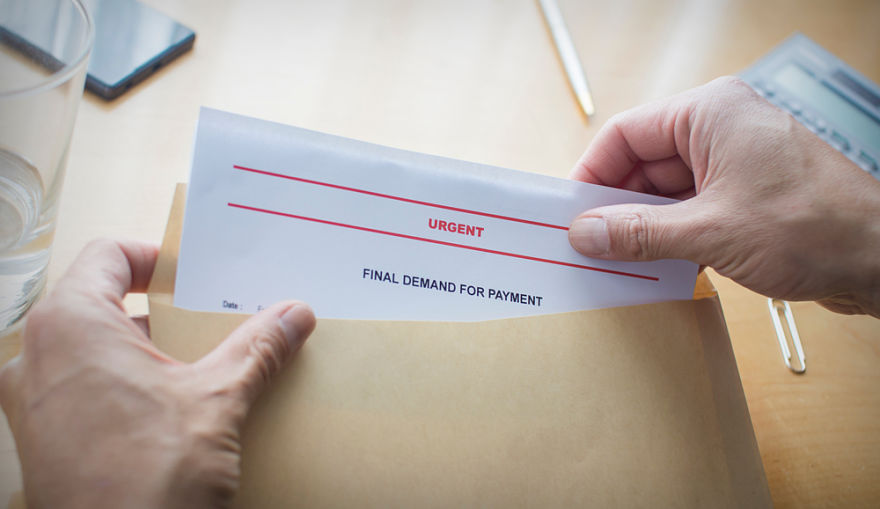
If I were to ask what is a demand letter, I would be referring to a letter of demand which refers to a formal letter requesting money, services, property or any other action. This helps me lay down my position as well as what I expect the recipient to do. Unlike informal letters, these letters create a formal record of the dispute between the two parties.
Demand letters are written for different reasons. I could write this letter because of an unpaid invoice, breached contract, property damage and personal injuries resulting from another person. These letters help define the problem in hand, give facts supporting it as well as the desired solution.
The main aim of such letters is to start the discussion without having to go to court. The general legal definition of a demand letter refers to a letter that outlines a dispute and demands a certain action or forbids an action from the recipient.
This helps me lay down my position as well as what I expect the recipient to do. Unlike informal letters, these letters create a formal record of the dispute between the two parties.
What Is a Demand Letter in Law?

What is a demand letter in law? From the perspective of the legal practice, it can be considered as a communication before a lawsuit that describes a claim and provides for its settlement. It can be written by an attorney, but I can also do it independently when it is necessary.
It should not be confused with a complaint submitted to the court since the letter does not initiate a lawsuit, does not create jurisdiction or provide me with the benefits of the discovery process. Nevertheless, it will enable me to describe the problem clearly and prove the timeline of attempts to settle it.
It is necessary for me to be precise, objective and well-informed, since a neutral, factual style of writing is more effective than an emotional one.
It is necessary for me to be precise, objective and well-informed since according to a demand letter writing guide, a neutral, objective and factual style of writing is more effective than an emotional one. In some cases, a demand letter is obligatory before filing a lawsuit, and in other cases, it is just one of many strategies.
What Does a Personal Injury Demand Letter Include?
A personal injury demand letter is a single document, which narrates the accident and the consequences of it in terms of costs. In this letter, I will write what happened, who is liable for it, what damage I have suffered and what compensation I require. A good written letter contains all the necessary details to make a recipient understand the situation.
The best way is when the letter is detailed, but not too controversial. It means that the letter should link the facts to damages and provide documentary evidence for each of them. The personal injury guide says that a demand letter is a request for compensation of liability and damages for starting the negotiation process.
The following sections provide a good template for the letter. I will be able to change the degree of detail according to the severity of injuries, evidence, and legal representation.
Section 1 — Statement of Facts and How the Accident Happened
The first section will be an account of the accident in chronological order. Here, I state the date, location, participants, and conditions, followed by a description of what occurred, without elaboration. Documentation through police reports, photos, eyewitnesses, and other contemporaneous materials can be used to make this portion factual.
Section 2 — Liability — Why the Other Party Is Responsible
This section will address the action or condition that causes the other party to be at fault for the accident and injury. This could include some unsafe action or unreasonable conduct, among others. While this is not necessarily intended to prove all of the legal issues, it must clearly establish the relationship between the other party’s action and my injuries.
Section 3 — Injuries and Medical Treatment Summary
I provide a summary of the injuries, first aid treatment, follow-up visits, diagnoses, procedures done, and the present condition. There should be a mention of future treatment that may be expected after a medical practitioner has taken into consideration. I should refrain from predicting the recovery process.
Section 4 — Economic Damages — Bills Lost Wages and Expenses
Damages in economics are those losses that I can easily tie to my invoices, pay stubs, receipts, and other kinds of paperwork. Instead of presenting one lump sum without explanation, I should itemize my damages. Categories to consider are:
- Medical expenses, including emergency visits, hospitalizations, doctor’s fees, and rehabilitation.
- Prescriptions, supplies, and expenses for getting to treatment.
- Wage loss or loss of earning ability.
- Damage to property and expenses paid.
Once I have presented these categories of losses, I should then include documentation to substantiate the losses and explain whether they have occurred in the past or will keep occurring.
Section 5 — Non-Economic Damages — Pain and Suffering
Damages for pain and suffering pertain to the personal impact of an injury as opposed to a receipt or a check. It is possible to talk about the physical pain that one feels, loss of sleep, nervousness, limitations on normal activities, lack of pleasure and alterations in social relations. The concrete illustration is much better than the fancy name.
Section 6 — The Settlement Demand Amount
Demand amount is expected to be correlated with the extent of injury and the proof of it. I could start with documented financial losses, include non-financial injuries, take into consideration disputed facts, future treatment, and the probability of negotiation. A formula is not an assurance of valuation.
An internal memorandum is useful for me to provide reasons for the amount of my demand:
| Damage Category | Supporting Material | Amount or Status |
|---|---|---|
| Medical expenses | Bills and treatment records | Documented total |
| Lost income | Pay records and employer information | Documented or estimated |
| Future care | Provider recommendations | Estimated future cost |
| Pain and suffering | Personal account and medical context | Requested non-economic amount |
The table serves as a tool for planning but should not replace my judgment. I need to look at the numbers for any duplication, be honest about estimates, and indicate whether the demand is meant to address the whole claim or just a part of it.
Section 7 — Response Deadline and Next Steps
My final step in the process will be to state what type of response I am seeking and when I would like to receive it. The time frame must be appropriate for the issue presented, and my letter must include the actions that I can take if there is no response. I must keep records of my receipt of the letter and everything that I send.
How Much Should You Demand in a Personal Injury Demand Letter?

No single figure exists that could apply to all injury claims. Medical expenses, lost earnings, future care, injury severity, and the strength of liability evidence can all affect the amount requested. Reviewing personal injury settlement examples may help explain how different damages can influence a claim, but previous results do not guarantee a similar recovery.
It is necessary to differentiate between a negotiating position at the start and an acceptable settlement figure. Making an excessive demand may undermine credibility, while ignoring significant damages may understate the claim. Although a settlement calculator could assist in collecting figures, it is not capable of resolving any disputes about liability nor predicting the outcome of a specific case.
Before sending a demand letter, the claimant should confirm the deadline for filing a lawsuit. A statute of limitations calculator may provide an initial estimate, but the actual deadline should be confirmed under the law of the relevant state because exceptions, notice rules, and special requirements may apply.
It is necessary to differentiate between a negotiating position at the start and an acceptable settlement figure. Making an excessive demand may undermine credibility, while ignoring significant damages may understate the claim.
What Happens After You Send a Demand Letter?

Depending on the reaction, the addressee might either accept, refuse, ask for further details, or offer something else. The response of the insurance company or any other side will depend on its internal review of the records. An insurance claims adjuster may evaluate the accident facts, medical records, liability evidence, and requested damages before recommending whether the claim should be accepted, disputed, or negotiated.
It will be important to record any delivery notices, responses, phone calls, and documents received. Should negotiations start, I will need to study the settlement terms offered very carefully and will not need to rely upon the conversation alone. Any release might affect my rights in the future; thus, it will be important to understand what I have agreed to sign.
If negotiations fail, the insurance company denies the claim, or the offered amount does not reasonably reflect the documented losses, the claimant may need to consider additional legal options. Readers can also review what to do if the insurance company denies the claim before deciding whether to pursue further negotiations or litigation.
Demand Letter vs. Filing a Lawsuit — What Is the Difference?
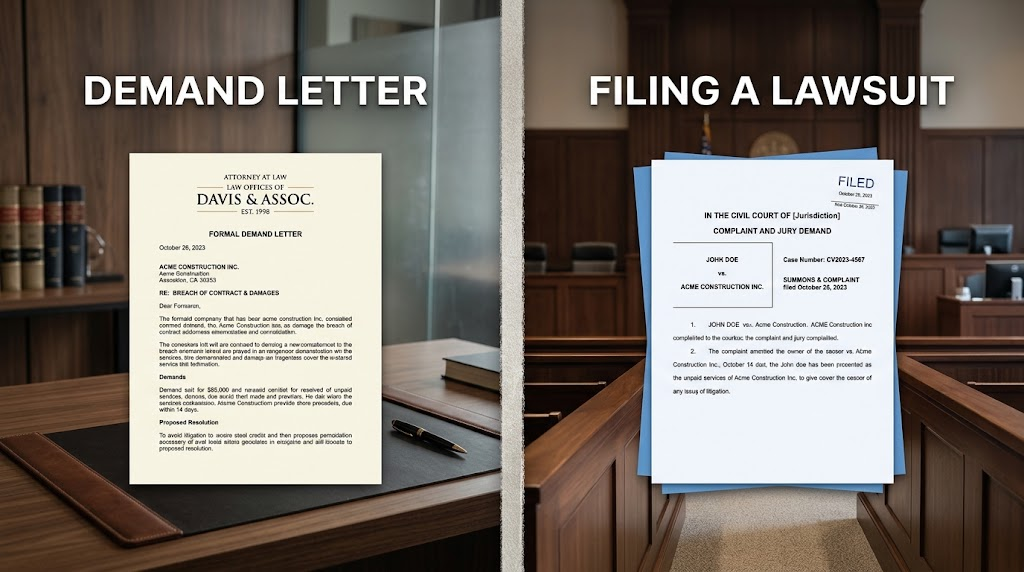
| Comparison Point | Demand Letter | Filing a Lawsuit |
|---|---|---|
| What It Is | A private, written request to resolve the dispute | A formal legal proceeding filed with the court |
| Where It Happens | Outside of court, directly with the other party or insurer | Inside the court system, before a judge |
| Legal Effect | Does not create jurisdiction or start a court case | Formally opens a case and triggers court deadlines |
| Timeline | Often faster, since it can settle without litigation | Typically longer, with discovery and court scheduling |
| Best Used When | Facts are clear and the case is fit for negotiation | Negotiation fails, fault is disputed, or a deadline is near |
Whereas a demand letter is a personal communication, a lawsuit is a formal legal proceeding. By sending a letter, the recipient is given an option of addressing the matter outside a court; a lawsuit involves the process of court proceedings and putting the matter in the court. I should not use one method automatically as a substitute for the other.
In some cases, sending a letter is a rational step if the case facts are ready, the dispute is proper for negotiation, and there are no urgent reasons to file first. Sometimes, I might lose my legal rights due to delays or provide the other party with a chance to adjust evidence or prepare its reply. Everything depends on the particular case, its jurisdiction, and the relevant filing period.
If the demand letter involves serious injuries, disputed fault, future medical treatment, or a substantial settlement, it may be helpful to find a personal injury lawyer who can review the evidence, assess the damages, and explain whether negotiation or a lawsuit is the more appropriate next step.
Injured in a Pedestrian Accident?
Our intake specialists are available 24/7 to listen, help you understand your options, and connect you with a qualified attorney at no cost.
Frequently Asked Questions
Is a demand letter legally required?
Sometimes a statute, contract, or specific type of claim may require a pre-suit demand, but many disputes do not. I should check the rules that apply to my claim before relying on a letter alone.
Can I write a demand letter myself?
Yes, I can write one myself, particularly when the facts and requested remedy are straightforward. A lawyer may be helpful when the injuries, damages, or legal issues are complicated.
Does sending a demand letter mean I am filing a lawsuit?
No. Sending the letter usually means I am making a pre-litigation request. It may lead to a settlement, but it does not itself start a court case.
How long should I give someone to respond?
The deadline should be reasonable for the dispute and the information requested. I should allow enough time for review while still protecting any filing deadline that may apply.
What documents should accompany a personal injury demand letter?
Relevant records may include medical bills, treatment records, wage documentation, photographs, reports, receipts, and other evidence supporting liability and damages. I should send only material that is accurate and appropriate to disclose.
Can the recipient ignore a demand letter?
Yes. The recipient may decline to respond, reject the request, or make a counteroffer. I should keep proof that the letter was delivered and consider my next option if the deadline passes.
Can I still sue after sending a demand letter?
Usually, sending a demand letter does not prevent me from filing a lawsuit, but deadlines still apply. I should avoid allowing negotiations to run past the time limit for bringing the claim.
LawyerHelpNow can help me take the next step by connecting me with lawyer-finding resources and a free case evaluation when I want individual guidance.