


Getting into a car accident in Texas can be a really unsettling experience. The moments right after can feel like a blur, and you might not know what to do next. But what you do in those first few minutes and hours really matters. It can affect how you recover physically and what happens with any insurance claims or legal stuff later on.
This guide is here to walk you through what to do after a car accident in Texas, step by step, so you know how to handle things.
Key Takeaways
- Always stop your car immediately after an accident in Texas. Leaving the scene is against the law and can lead to serious charges.
- Check for injuries right away. If anyone is hurt, call 911 immediately. Even minor-looking injuries should be checked by a doctor soon after.
- Exchange information with the other driver(s) involved. Get names, contact details, license plate numbers, and insurance info.
- Document everything you can. Take pictures of the vehicles, the scene, and any damage. Write down notes about what happened while it’s fresh in your mind.
- Contact your insurance company to report the accident, but be careful about what you say. It’s often a good idea to talk to a lawyer before giving detailed statements.
Immediate Steps After a Car Accident in Texas
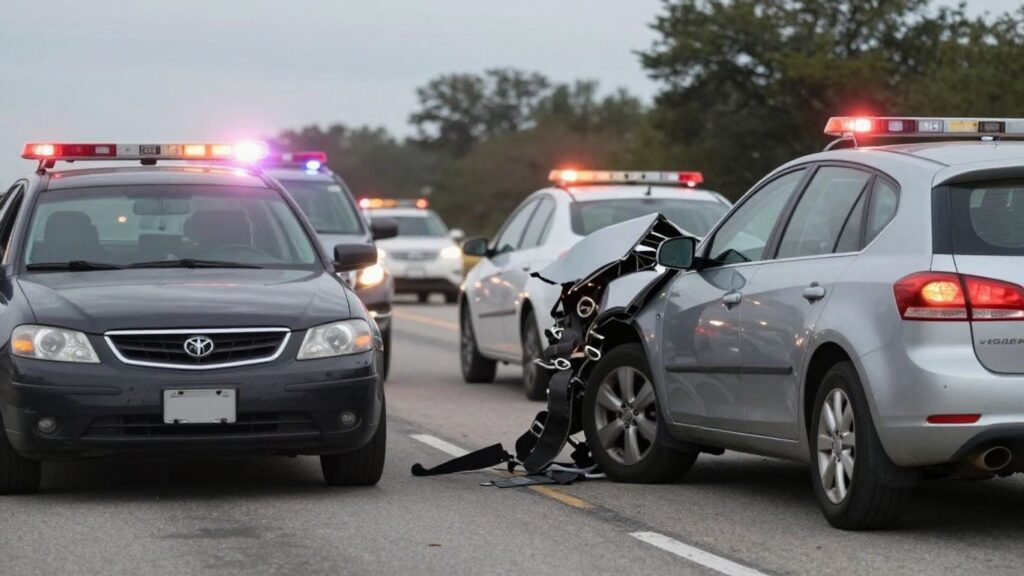
Alright, so you’re involved in a car accident in Texas. It’s alarming, and your first reflex may be to simply panic, but take a deep breath if you want. Joseph420 via Getty Images The first moments in a crash are crucial both for your safety and for what steps you might need to take next. Here is a step by step what you should do.
Ensure Safety and Check for Injuries
Step one– Make sure to get everyone as safe as possible. Move your car out of traffic if it is safe to do so, and your vehicle is still operable. This helps prevent another crash. Switch the hazard lights on straight away for other vehicles to get a warning beforehand.
If it’s night or visibility is poor, place reflective triangles or flares behind your vehicle. Stop more damage than is the first thing above everything else.
Next, assess yourself and your passengers for any injuries. But in practice, if anyone appears sore, or even if they don’t, don’t move them unless there’s an imminent threat like a flame. You could even worsen a potentially serious injury. This is not one of those car crash Texas steps that can be avoided.
Call the Police and Report the Accident
Even if the accident was minor, such as a fender bender, it is always advisable to summon the police. In Texas, you must report if someone is injured or killed, or if the property damage exceeds $1,000. You might want a police report down the road. It documents what happened, who was involved, and sometimes preliminary opinions on blame.
Generally, if you have an accident with a car in Dallas or elsewhere, the quick call to 911 is the standard procedure. They will send an officer out to the scene. Be aware of the fact that if someone was injured, and then it has become a felony, but leaving the scene without reporting can put you in many legal problems in law.
Exchange Information with Other Drivers
When it is safe for you to do so, and/or the police have given consent after your incident, ensure you obtain details of the driver(s) of the other vehicle(s). You’ll want to get:
- The third part is their full name and contact information (phone number, address)
- Their driver’s license number
- The name of their insurance company and their policy number
- The plate number of their vehicle
- The year, make/model, and color of their vehicle
Also, to obtain the names as well as the phone # of witnesses. Do not admit fault or apologize profusely. Just continue to exchange facts. These are basic Texas auto accident procedures.
Document the Scene Thoroughly
Your phone is your best friend right now. Take as many pictures and videos as you can from different angles. Capture:
- Damage to all vehicles involved.
- The overall scene, showing the position of the cars and the surrounding area (road signs, traffic signals, etc.).
- Any skid marks or debris on the road.
- The license plates of all vehicles.
- Any visible injuries.
Even minor damage is wise to document if you face what to do after a fender bender in Houston. This evidence is quite valuable when making an insurance claim or if you opt for seeking a lawsuit. These actions taken immediately after a collision in Texas can make a whole lot of difference later on.
The decisions you make in the immediate aftermath of a collision can significantly impact your recovery and any potential claims. Staying calm, prioritizing safety, and gathering information are key steps. Understanding your legal obligations under Texas law, such as the requirement to stop and report, is also vital. These initial actions form the foundation for navigating the complexities that follow an accident.
— James R Calloway
Lest we forget, the steps to follow after a car crash in Texas are meant for your protection. In case you have been wondering what to do after a fender bender in Texas, the following steps serve as a good place to start. Please visit the Texas Department of Transportation for more on what needs to be reported.
Understanding Texas Car Accident Laws
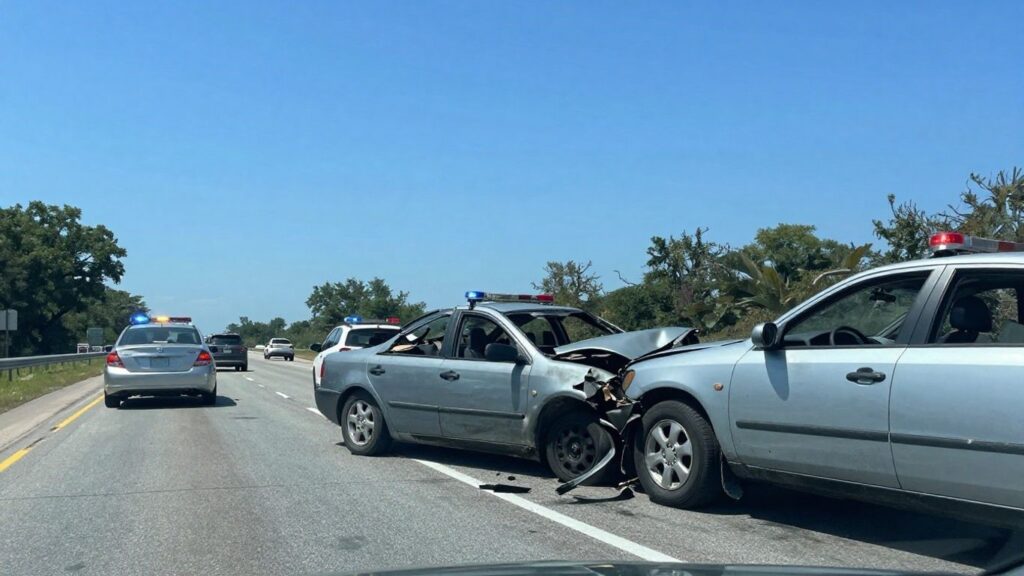
After the trauma of suffering a car accident in Texas, you need to at least try to understand the legal landscape. Texas is considered an “at-fault” state. This means that the driver responsible for the crash is liable for any resulting damages or personal injuries.
Because it’s not a no-fault system — where everyone handles things with their own insurance regardless of who caused the wreck. As such, determining fault is a critical determination in the Texas car accident claims process.
Texas ‘Fault’ State Explained
In an at-fault state, if another driver is responsible for your accident, you are entitled to collect compensation from them (typically through their insurance). And this is why it is so important to get as much information on the site as possible, because it determines the fault. Proof of the other driver’s responsibility for causing the crash is the aim.
This can include police reports, witness statements, and accident photos as well (in Texas, any time the police are called to respond to a car accident, they will generate an official report). If your Texas car wreck case is complicated and involves such concerns, the first thing you need to know is this: Texas has a fault system.
The Role of Comparative Negligence in Texas
Texas law now introduces an additional layer: “comparative negligence”. Here is where things can become a touch complicated. Even if the other driver was predominantly to blame for the accident, if it is determined that you were at least partially responsible, your compensation could be lowered. For instance, Texas uses something known as a modified comparative negligence rule.
This ensures that the percentage of fault will be deducted from your damage award only if you are less than 50% to blame for the crash. For example, if you are determined to be 20 percent responsible for the accident and your total damages are $10,000, but you can only recover $8,000 (your total damage amount minus your percentage of fault).
Here’s a quick look at how it works:
| Your % of Fault | Ability to Recover | Compensation Reduction |
|---|---|---|
| 0 – 49% | ✓ Yes | Reduced by your fault % |
| 50% or more | ✕ No | N/A |
That is precisely, of course, why sound Texas auto accident legal advice is more often than not a wise alternative. When your car accident claim procedures a discovering party, you must bring in an attorney to traverse obligation and additionally deliver protections once more on your rights. Keep in mind that there are also strict timelines, such as the two-year statute of limitations for bringing a personal injury lawsuit after an accident.
If you do not file before the deadline, you might end up losing your right to compensation completely. It’s highly advisable to be early with seeking Texas car crash legal advice if you are unsure about your situation.
Next Steps: Dealing with Insurance and Potential Claims
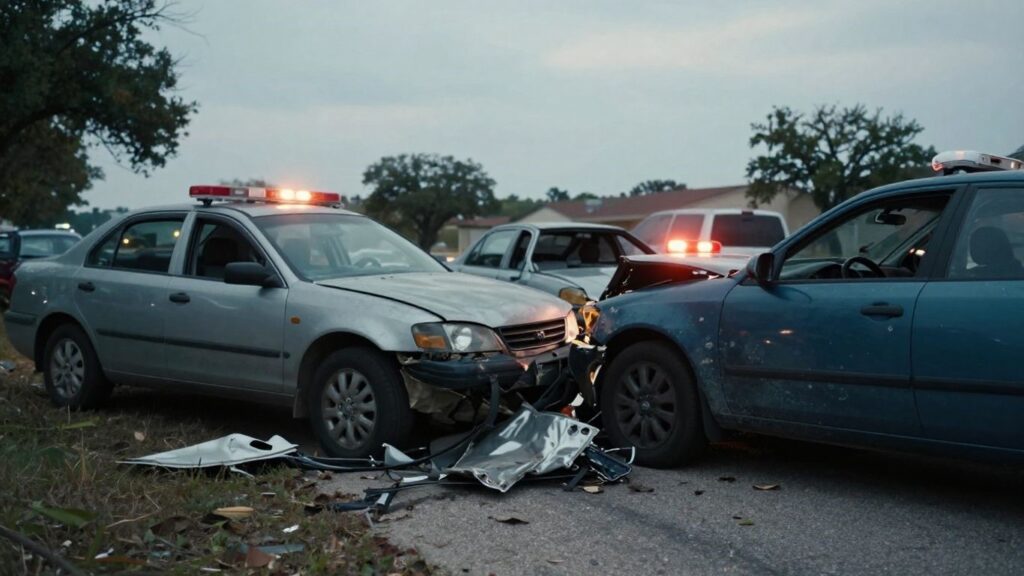
Okay, so you’ve done the immediate stuff after the accident. Now what? It’s time to think about the practical side of things, which mostly means dealing with insurance companies and figuring out if you need to file a claim. This can feel like a whole other accident in itself if you’re not careful.
Notifying Your Insurance Company
The first step is to notify your own insurance company of what took place. Texas has an “at-fault” system that requires the person responsible for the crash to pay for any damages. However, regardless of whether the other driver was absolutely at fault, your insurance company must still be informed. Many policies state that you have to report accidents within a certain time frame, so don’t put it off. When you do call them, just state the facts — when, where, who was involved, and if a police report was filed.
Do not guess who was at fault or describe your injuries in detail. You are NOT obligated to provide a recorded statement for the other driver’s insurance company, and typically, you should not. They’re not your friends, and anything you say can be construed as evidence against you later on. You may be better off telling them that your attorney will be taking care of communications, or at least until you have seen your doctor and know the extent of any resources.
When to Consider Hiring a Car Accident Lawyer
This is a big one. If you have been involved in a fender bender, no injuries, slight damage to vehicles, it might be okay for you to tackle this yourself. However, if injuries have occurred, even if they seem mild at first, or the other driver’s auto insurance is being obstructive, then it’s probably time to speak to a lawyer. Insurance adjusters are skilled in resolving claims for the lowest amount possible.
Immediately after the accident, they may give you an offer for a quick settlement, but this rarely includes what your medical bills are or the wages that you’ve lost to date because of your injuries not getting better over time. A lawyer can also help you understand the full value of your claim and navigate around the insurance companies so that you do not inadvertently say something to harm your case. If your crash happened in Houston or Harris County, compare vetted firms in our guide to the best car accident lawyers in Houston.
Seeking Medical Attention, Even for Minor Injuries
Seriously, don’t skip this. Even if you feel fine after the accident, you need to have a doctor check you out. Others, such as whiplash or internal bleeding, are not visible immediately. Visiting the doctor right away generates a medical record connecting your injuries to the accident. By waiting weeks to go see a doctor, the insurance company can claim that your pain didn’t start until after you (April 2023) weren’t in an accident.
You should also be honest and transparent with your doctor in case you feel any kind of pain, discomfort, or other weird bodily sensations. This documentation is critical to any insurance claim or potential litigation. This helps paint a complete picture of how the accident impacted your life.
Insurance companies often try to get you to accept a quick settlement. These offers might seem tempting, especially if you have bills piling up, but they are usually much lower than what your claim is actually worth. Accepting one means you likely can’t ask for more money later, even if your injuries turn out to be much worse than you thought. It’s a common tactic to close cases cheaply.
— James R Calloway
Wrapping It Up
So, you’ve made it through the tough stuff. Dealing with a car accident in Texas is never fun, and honestly, it can be a real headache. But by following these steps, you’re giving yourself the best shot at handling things right.
Remember to stay safe, get checked out by a doctor even if you feel okay, and don’t say too much to insurance folks without thinking it through. Texas has its own set of rules, like that two-year deadline for filing claims, so don’t let that sneak up on you. Taking care of yourself and protecting your rights after a crash is the main goal here.
Frequently Asked Questions
What’s the very first thing I should do after a car crash in Texas?
The absolute first thing to do is stop your car right away. Texas law says you must stop at the scene. After that, check if anyone is hurt and call 911 if they are. If it’s safe, try to move your car out of the way of traffic to prevent more accidents. Make sure your hazard lights are on.
Do I need to call the police even for a small accident with no injuries?
Yes, it’s a really good idea to call the police even for minor crashes. Texas law might require a report if the damage looks like it’ll cost over $1,000 to fix. Having an officer there creates an official record, which can help if the other driver later changes their story or if your insurance company needs proof.
How long do I have to report a car accident in Texas?
If the police come to the scene, they’ll usually file the report. But if no police officer investigates and the accident caused injuries, death, or damage over $1,000, you have 10 days to send a written report to the Texas Department of Transportation (TxDOT).
Is Texas a ‘fault’ state or a ‘no-fault’ state for car accidents?
Texas is an ‘at-fault’ state. This means the driver who caused the accident is the one responsible for paying for the damages. If you’re in an accident, you can go after the other driver’s insurance, use your own insurance if it applies, or even take them to court if needed.
How long do I have to file a lawsuit for a car accident in Texas?
You generally have two years from the date of the accident to file a lawsuit for personal injuries or property damage in Texas. If you miss this deadline, you’ll likely lose your chance to get compensation through the courts.
Should I see a doctor even if I don’t feel hurt after the crash?
Definitely. It’s super important to get checked out by a doctor soon after an accident, even if you feel fine. Things like concussions or internal injuries might not show symptoms right away. Seeing a doctor quickly helps make sure you get the right treatment and creates official proof that your injuries are linked to the accident.