

Can I Sue a Hospital for Negligence? What Patients Need to Know
Going to the hospital should be about getting better, right? But sometimes, things go wrong. Maybe you got the wrong medication, or a surgery didn’t go as planned. It’s a scary thought, but if you’ve been harmed because of a hospital’s mistake, you might be wondering,
“Can I sue a hospital for negligence?” It’s a big question, and understanding your rights is the first step to figuring out what to do next. This article breaks down what you need to know.
Key Takeaways
- You can sue a hospital if its staff’s carelessness or errors directly caused you harm. This is known as hospital negligence.
- Hospital negligence can include things like surgical mistakes, wrong diagnoses, medication errors, or poor patient care due to understaffing.
- To win a lawsuit, you generally need to prove the hospital owed you a duty of care, breached that duty, and that this breach caused your injuries and losses.
- Hospitals are often responsible for the actions of their employees under a legal principle called ‘respondeat superior.’
- Gathering solid evidence, like medical records and expert opinions, is vital. It’s also usually best to get help from a lawyer experienced in these types of cases.
Understanding Hospital Negligence
At a hospital, you don’t expect to get worse. That’s usually the case. Medical staff, nurses, and others strive to give good care. However, it is possible for things to go wrong sometimes. When they do, it’s not always a simple error or unavoidable complication. In some cases, the hospital or its personnel does not provide a standard of care, and as a result, the patient is harmed. This is the definition of hospital negligence.
Hospital negligence is when a hospital or its staff acts in a negligent manner that causes injury or harm to a patient. It’s a general word that can mean a lot of things: a nurse not keeping track of a patient properly, a surgeon making a critical mistake in the operating room. It is the hospital’s duty to provide you with safe and competent care. If you are negligent and someone suffers as a result, you may have a case for a hospital malpractice lawsuit.
Consider it: Hospitals are multifaceted organizations that have a lot of parts. They are responsible for keeping their facilities safe, employing qualified personnel, and having the correct procedures in place. Failure to carry them out can result in a hazardous situation for patients. This is not only about the individual doctor’s mistakes, but it’s about the systemic failures in the hospital that result in bad outcomes. Pursuing medical negligence legal action can be complex, but it’s often necessary to get the compensation you deserve for patient harm.
Here are some common areas where hospital negligence can occur:
- Medication Errors: Giving the wrong drug, the wrong dose, or administering it incorrectly.
- Surgical Mistakes: Operating on the wrong body part, leaving instruments inside a patient, or performing surgery negligently.
- Diagnostic Errors: Misdiagnosing a condition, delaying a diagnosis, or failing to order necessary tests.
- Infections: Failing to maintain sterile environments or follow proper infection control protocols, leading to hospital-acquired infections.
- Failure to Monitor: Not watching a patient’s vital signs or condition closely enough, especially after surgery or in critical care.
- Birth Injuries: Negligence during labor and delivery that harms the mother or baby.
Understanding these different types of failures is the first step in recognizing when your rights as a patient might have been violated. If you believe you’ve been a victim of hospital errors, knowing your legal options for hospital neglect is important. It’s about holding the institution accountable for the care it provides and seeking medical negligence compensation for the suffering caused.
If you’re wondering how compensation works in these cases, check how much is a medical malpractice case worth for a deeper understanding.
Common Examples of Hospital Negligence
When you’re in a hospital, you’re usually at your most vulnerable. You believe that the people who are taking care of you know what they are doing and will not make things worse. Sadly, this is not always the case. Hospital negligence can occur in a myriad of forms and can result in significant injury.
So, what is negligence anyway? It’s essentially when the hospital or its employees make a mistake that a reasonably careful hospital would not make, and that mistake results in injury to a patient. It’s not only a bad outcome, but it’s also a failure to provide proper care.
Here are some common ways hospital negligence can occur:
- Medication Errors: This is a big one. It could be giving you the wrong drug, the wrong dose, or even giving you medication at the wrong time. Sometimes, it’s about not checking for dangerous drug interactions. Imagine being given a blood thinner when you’re already on something that increases bleeding risk – that’s a serious mistake.
- Surgical Mistakes: Things can go wrong in the operating room. This includes operating on the wrong body part, leaving surgical tools inside a patient (yes, that actually happens), or performing the surgery in a way that causes unnecessary damage.
- Infections: Hospitals are supposed to be clean places, but sometimes they aren’t. If a patient gets an infection because the hospital staff didn’t follow proper hygiene protocols, like not washing their hands or not sterilizing equipment correctly, that’s negligence.
- Diagnostic Errors: This can happen in a few ways. A doctor might misdiagnose your condition, or they might delay making a diagnosis. This means you don’t get the right treatment when you need it most, and your condition could get much worse.
- Failure to Monitor: After a surgery or procedure, patients need to be watched closely. If the hospital staff doesn’t monitor a patient’s vital signs or condition properly, they might miss a serious problem, like internal bleeding or a sudden drop in oxygen levels, until it’s too late.
- Birth Injuries: When a baby is born, things can get complicated. Negligence during labor and delivery can lead to serious injuries for both the mother and the baby, such as cerebral palsy or nerve damage.
- Emergency Room Errors: The ER is often chaotic, but that’s no excuse for poor care. Mistakes can include misdiagnosing a life-threatening condition, discharging a patient who needs further treatment, or causing delays that worsen a patient’s outcome.
It’s important to remember that not every bad outcome in a hospital is due to negligence. Sometimes, despite the best efforts of the medical team, complications can still arise. The key is whether the care provided fell below the accepted standard of care that a reasonably competent healthcare provider would offer in a similar situation.
These are just some of the more common examples. If you believe you or a loved one has been harmed due to a mistake made at a hospital, it’s worth looking into.
These cases fall under broader personal injury claims. To understand potential payouts, see average personal injury settlement amounts.
Can You Sue a Hospital for Negligence?

Yes, it is possible to sue a hospital for negligence. It’s not only doctors or nurses who can make mistakes, but hospitals can make mistakes too. A hospital can be held responsible if its actions or inactions cause injury. This indicates that if you or someone you know was injured due to a lack of proper care by the hospital, you may have a legal claim.
Imagine this: hospitals have far more responsibility for more than just a bed. They must employ qualified personnel, maintain clean and secure premises, and have effective policies to ensure that care is provided effectively. If they fail to perform any of these duties and someone is injured because of it, that’s hospital negligence.
So, what kind of situations might lead to a lawsuit?
- Negligent hiring or supervision: Hiring staff who aren’t qualified or failing to keep an eye on them.
- Unsafe conditions: Not maintaining a clean environment, which can lead to infections.
- Medication errors: Giving the wrong drug or the wrong dose.
- Surgical mistakes: Operating on the wrong body part or leaving things inside a patient.
- Diagnostic errors: Failing to diagnose a condition or taking too long to figure out what’s wrong.
- Birth injuries: Mishandling labor and delivery complications.
- Understaffing: Not having enough nurses or staff, leading to neglect or delays.
- Emergency room issues: Improper care or sending someone home too soon.
The important thing is to establish that your injury or condition was a direct result of the hospital’s negligence. This frequently means demonstrating that the hospital was negligent in failing to provide the care that it was obligated to provide you and that this negligence caused you actual damages.
It’s a complicated area, and knowing the details of your situation is crucial, particularly when it comes to an injury from a car accident and medical treatment is involved, which is why it’s important to consult a personal injury lawyer to help navigate the claims process and secure fair compensation for injuries.
Injuring a hospital is not just about getting money for yourself. It can also force hospitals to make improvements to their safety standards and practices, so that others do not experience the same ordeal. It’s about responsibility and making health care safer for all.
If they fail, you may have a claim—similar to other injury cases like what to do after a car accident.
When Is a Hospital Liable for Negligence?
So, when exactly can you point the finger at a hospital and say, ‘Hey, this is your fault’? It’s not always as straightforward as it seems.
Employer Responsibility for Staff
Basically, hospitals are generally on the hook for the screw-ups of their employees. The concept has a legal term, ‘respondeat superior’ (let the master answer). It means that if a nurse, technician, or even a doctor working directly for the hospital makes a mistake while on duty and injures you, the hospital is liable for the mistake.
If a delivery person for a company is involved in an accident while on duty, the company is generally responsible, correct? It’s a similar concept here. This includes all the staff, from ER to surgery.
Independent Contractors vs. Hospital Staff
This is where it can become a bit tricky. Typically, hospitals would be responsible for their own staff, but not for doctors or other medical professionals who are considered independent contractors. These are individuals who are not on the hospital’s payroll but have admitting privileges or work in the hospital. Determining who’s who and where’s who can be difficult, and sometimes it’s hard to tell the difference between the two.
In a hospital liability case, it is a significant issue to determine if the medical professional was an employee or an independent contractor. If the professional is an independent contractor, you may need to file a lawsuit against them directly, which may be more difficult. Exceptions exist, however, and in some cases, hospitals may be held liable for independent contractors if they were negligent in their hiring or supervision of the contractor or if the patient reasonably believed that the contractor was a part of the hospital’s staff.
Here’s a quick rundown of who might fall under the hospital’s direct responsibility:
- Nurses
- Medical technicians
- Orderlies
- Administrative staff
- Physicians directly employed by the hospital
And here are some who might be independent contractors (though it depends on the specifics):
- Some visiting specialists
- Certain surgeons who have their own practice
- Anesthesiologists not on a salary
It’s important to remember that the specific employment status can be complex and often depends on the details of the contract and how the professional actually works within the hospital. This is why getting a lawyer who knows this stuff is so important.
Key Elements of a Hospital Negligence Claim

So, you think that a hospital did something wrong and hurt you? You need to establish a couple of things if you’re going to take any action, such as filing a patient injury claim. It’s not simply a matter of saying, ‘They were bad. A clear sequence of events should be demonstrated.
First off, there’s the duty of care. The hospital and its staff were legally obligated to give you a certain amount of medical care. Pretty standard, right? When you visit a hospital, you expect them to provide you with the proper care.
Then there’s the violation of that responsibility. This is where you show they didn’t meet that expected standard. Perhaps a diagnosis was not made, or the nurse administered the wrong medication, or there was a lack of staff members to work during the shift. It’s about the things they did wrong, or the things they did not do.
Then, you need to establish causation. This is a big one. You must prove that the hospital’s error caused your injury or worsened your condition. Their action or inaction has to be the reason that you suffered; it can’t just be a coincidence.
Last but not least, there are damages. This is about the actual damage you suffered. It may be physical pain, emotional distress, increasing medical expenses, loss of income due to inability to work, or even permanent disability. The actual impact of the hospital’s negligence must be demonstrated.
These elements can be difficult to prove, and may involve examining medical records and obtaining opinions from other medical professionals. It can be difficult to prove, and at times, the hospital will say that it was just a bad thing that happened, not negligence.
Here’s a quick rundown:
- Duty of Care: The hospital owed you a certain standard of medical treatment.
- Breach of Duty: The hospital or its staff failed to meet that standard.
- Causation: The failure directly caused your injury or worsened your condition.
- Damages: You suffered actual harm (physical, financial, emotional) as a result.
Damages often include emotional distress. Learn more in how much can I sue for emotional distress.
Steps to Take if You Suspect Hospital Negligence
So, you believe that something has gone wrong at the hospital? It’s a challenging situation, and knowing what to do next can be overwhelming. The first step is to collect all your medical documents from your hospital stay or treatment. This includes doctors’ notes, test results, medication lists, and discharge summaries. It is extremely crucial to have these documents.
It is then a good idea to write down all that you recall of what happened. Be specific: dates, times, names of staff involved, what was said, what you saw. This personal story can be very useful in the future.
Don’t wait to get professional advice. It is extremely important to speak to a medical negligence lawyer as soon as possible. They can review your case, let you know if you have a legitimate claim, and advise you on what you can do. Hospitals have attorneys on staff, and you’ll want to have one of your own who is familiar with the legal aspects of such cases.
Here are some key steps to consider:
- Document Everything: Keep meticulous records of all medical treatments, communications, and expenses.
- Seek a Second Opinion: If your condition worsens or wasn’t properly diagnosed, get an opinion from another doctor.
- Consult a Specialist Attorney: Find a lawyer experienced in hospital negligence claims.
- Preserve Evidence: Don’t alter or discard any medical devices, medications, or other items related to your care.
Remember, hospitals are businesses, and they have a duty to provide a certain level of care. When that duty is breached and causes harm, you have rights. It’s not about blame; it’s about accountability and making sure patients receive the safe care they deserve.
Trying to handle this on your own is a big ask. These cases are complex, and there are strict deadlines for filing claims. Getting a lawyer involved early can make a huge difference in protecting your rights and building a strong compensation case.
If your injury happened at work or during employment, also review what to do after a workplace injury.
What Evidence Do You Need?
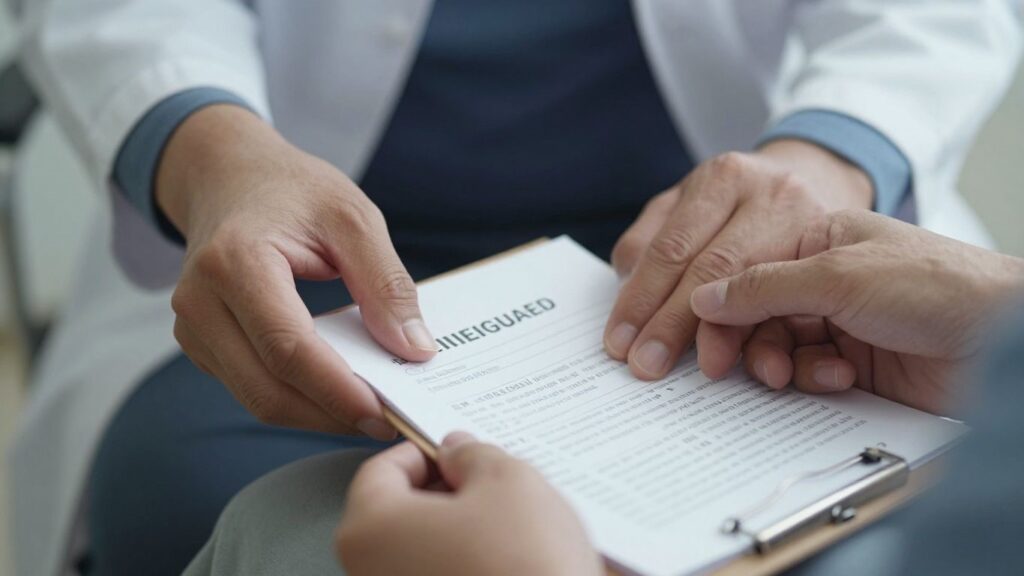
If you think you may have a case against a hospital for negligence, you may need to hire a personal injury attorney. This is a huge deal, and if you want to have any chance of it, you’re going to have to have some good proof. You can’t just feel bad about something; you have to prove it.
The collection of appropriate evidence is of critical importance in developing a good claim. It’s like assembling a puzzle; every piece of information helps to form a clearer picture of what went wrong and why the hospital is to blame.
Here’s a breakdown of what you’ll likely need:
- Medical Records: This is your primary source. Get copies of everything – doctor’s notes, test results, medication logs, surgical reports, discharge summaries, and even billing statements. These documents show the timeline of your care and any deviations from what should have happened.
- Witness Statements: Did a family member or friend see something concerning during your stay? Their firsthand accounts can be really helpful. Sometimes, other hospital staff might have relevant information too, though getting them to talk can be tricky.
- Expert Medical Opinions: This is a big one. You’ll almost certainly need a qualified medical professional, someone who isn’t involved in your case, to review your records. They can explain to a judge or jury what the standard of care was and how the hospital staff failed to meet it, and importantly, how that failure directly led to your injury.
- Photographs or Videos: If the negligence resulted in visible injuries, like bedsores or surgical errors, clear photos or videos taken at the time can be powerful evidence.
- Financial Records: Keep track of all expenses related to the negligence – medical bills (past and future), lost wages from being unable to work, rehabilitation costs, and anything else that shows the financial impact on your life.
Proving negligence is more than just establishing that a mistake occurred. You must prove that the hospital or staff had a duty to provide a certain standard of care, that they did not provide that care (they breached that duty), and that your injuries and losses were a direct result of their failure to provide the care. It’s a chain of events that needs to be clearly established.
It can be a lot to gather all this, and, well, it is a lot. This is why it is crucial to have a lawyer who understands how to obtain these records, locate the appropriate experts, and present them in a manner that is easy to understand. They will be familiar with the documents that are most critical to their health and will know how to obtain them, even if the hospital is not particularly inclined to give them.
These are similar to other injury claims like how much is a car accident settlement worth.
Understanding the Legal Process
So, you believe you may have a case against a hospital for negligence? It’s a big step, and the legal path can be somewhat intimidating. But don’t fear, we’ll explain what’s usually going on.
First, you will need to consult with a lawyer with medical malpractice experience. They will review your case and medical records to determine if you have a strong case. When it appears to be a viable option, the next step is typically a lawsuit. This officially starts the legal proceedings.
Once that happens, it’s time for what is known as the discovery phase. This is the time when both parties share information and evidence. Consider it as an official means of collecting all the facts. Your attorneys may depose medical personnel, in which case they will ask questions of them under oath. They will also be examining hospital policies and procedures to determine if they were adhered to.
Here’s a general idea of the steps involved:
- Case Evaluation: Your attorney reviews your medical records and talks with you about what happened.
- Expert Review: Medical experts are brought in to give their professional opinion on whether the care you received fell below the accepted standard.
- Filing the Lawsuit: The official legal complaint is filed with the court.
- Discovery: Both sides exchange documents, take depositions, and gather more evidence.
- Settlement Negotiations: Many cases are resolved outside of court through discussions and mediation.
- Trial: If a settlement can’t be reached, the case goes before a judge or jury.
It’s important to know that there are deadlines, called statutes of limitations, for filing these kinds of claims. Missing them means you could lose your right to sue. This is why it is crucial to seek legal counsel as early as possible. It can take a while, sometimes even a couple of years, but it is meant to fully explore the circumstances and seek just compensation for things such as medical expenses, lost wages, and pain and suffering.
With a lawyer working on the complexities, you can concentrate on recovering. A lawyer can assist in determining liability in more complicated claims if you are in a situation similar to a minor car accident, where the fault is not immediately apparent.
The purpose of the legal system is to make sure that if a hospital has been negligent, the wrongdoer is punished and the victim is given some form of compensation for the damages suffered. This is a time-consuming but comprehensive process.
Cases can take time, check how long does a personal injury case take for timelines.
Potential Challenges in Suing a Hospital

You believe you have valid grounds for a negligence claim against a hospital. This is a significant step, and sometimes it’s not always easy. Hospitals are big institutions, and they have their own team of lawyers on standby. The big challenge is establishing that the hospital itself, rather than any one doctor or nurse, was negligent and that this negligence caused your injury.
Here are some common challenges you might run into:
- Proving Negligence: It’s not enough to just show that something went wrong. You have to demonstrate that the hospital staff or the hospital itself failed to meet the accepted standard of care. This often requires expert medical testimony, which can be expensive.
- Identifying Liable Parties: Was it a nurse, a doctor, an administrator, or the hospital’s policies that caused the problem? Pinpointing who is legally responsible can get complicated, especially when dealing with independent contractors versus hospital employees.
- Gathering Evidence: Medical records can be complex, and sometimes they aren’t as complete as they should be. You’ll need to collect all relevant documents, which can be a daunting task.
- Statute of Limitations: There are deadlines for filing lawsuits, and if you miss them, you could lose your chance to seek compensation entirely.
At times, the most difficult part is just getting the answers. Hospitals are often guarded, and it can take persistence and skill to find out what went on behind closed doors.
When you file a lawsuit against health care providers for mistakes, you are taking on a system that is designed to protect itself, particularly if you are suing a large medical facility. That’s why it’s crucial to have a legal team who are familiar with these unique issues when thinking about suing a hospital for negligence.
These complexities are similar to cases like truck accident lawyer claims, where multiple parties may be involved.
Finding the Right Legal Help
You believe you may have a case against a hospital for negligence. That’s a lot to take on alone, and, well, it’s probably not the smartest thing to do. These cases are complex, and hospitals have attorneys on staff to defend themselves. You truly need somebody on your side who understands the intricacies of medical malpractice law.
It is very important to have a lawyer with experience in this type of case. They understand what proof to search for, how to converse with doctors and insurance providers, and what deadlines you simply can’t miss. Imagine that they are your guide through a very confusing maze.
Here’s what a good lawyer will do for you:
- Investigate your claim: They’ll dig into your medical records, talk to witnesses, and figure out exactly what went wrong.
- Build your case: They’ll work with medical experts to prove that the hospital’s actions fell below the expected standard of care and caused your injuries.
- Handle negotiations: They’ll deal with the hospital’s legal team and insurance adjusters, so you don’t have to.
- Represent you in court: If a settlement can’t be reached, they’ll fight for you in front of a judge and jury.
Not only is it about getting money, but it’s about holding the hospital accountable and ensuring that it doesn’t happen to anyone else. The good lawyer knows that.
If you’re searching for a lawyer, do not choose the first one you come across. Find a medical malpractice attorney who has experience in medical malpractice cases. A lot of them provide free initial consultations, so you can speak with a couple of attorneys before you determine who feels right for you and your situation. It is a significant choice, so do not rush and select the best advocate to help you acquire the justice you deserve.
Wrapping Up: What to Remember
When things go wrong, it can seem like a huge uphill battle to deal with a hospital. The hospital itself can be liable if a doctor makes a mistake, or if the systems, staff, or policies of the hospital cause harm to the patient.
Keep in mind that you will typically have to demonstrate that the hospital had a duty to care for you, that duty was breached, and that the breach of duty led to your injuries. There’s a lot to absorb here, and it’s difficult to navigate on your own. That is why it is typically best to consult with a lawyer who is familiar with this type of information. They can assist you with details and determine whether or not you have a case.
If you’re unsure where to start, begin with a free case evaluation to understand your options.
Frequently Asked Questions
What exactly is hospital negligence?
Hospital negligence happens when someone working at the hospital makes a mistake or doesn’t do their job correctly, and it ends up hurting a patient. It’s different from medical malpractice, which usually points to a doctor’s error. Hospital negligence means the hospital itself, as a place, is responsible for the actions of its staff or for not having proper systems in place.
Can I really sue a hospital?
Yes, you absolutely can sue a hospital if you’ve been harmed because of their carelessness or the mistakes of their employees. The law says hospitals have a duty to provide safe care, and if they fail to do so, leading to your injury, they can be held accountable.
What are some common ways hospitals are negligent?
Hospitals can be negligent in many ways. Some common examples include giving the wrong medicine or dose, making errors during surgery, not figuring out what’s wrong with a patient quickly enough, or not having enough staff, which can lead to patients not getting the care they need on time.
What do I need to prove to win a hospital negligence case?
To win, you generally need to show four main things: 1) The hospital had a duty to care for you properly. 2) They failed to meet that standard of care (they were careless). 3) Their carelessness directly caused your injury. 4) You suffered actual harm or losses because of it.
What should I do if I think I’ve been a victim of hospital negligence?
First, focus on getting better. Then, gather all your medical records and any notes you have about what happened. It’s really important to talk to a lawyer who specializes in these kinds of cases as soon as possible. They can help you understand your options and guide you through the process.
Is it hard to sue a hospital?
Suing a hospital can be challenging. Hospitals often have experienced lawyers defending them, and proving negligence usually requires expert medical opinions. That’s why having a skilled attorney on your side is so crucial. They know how to handle these complex cases and fight for your rights.